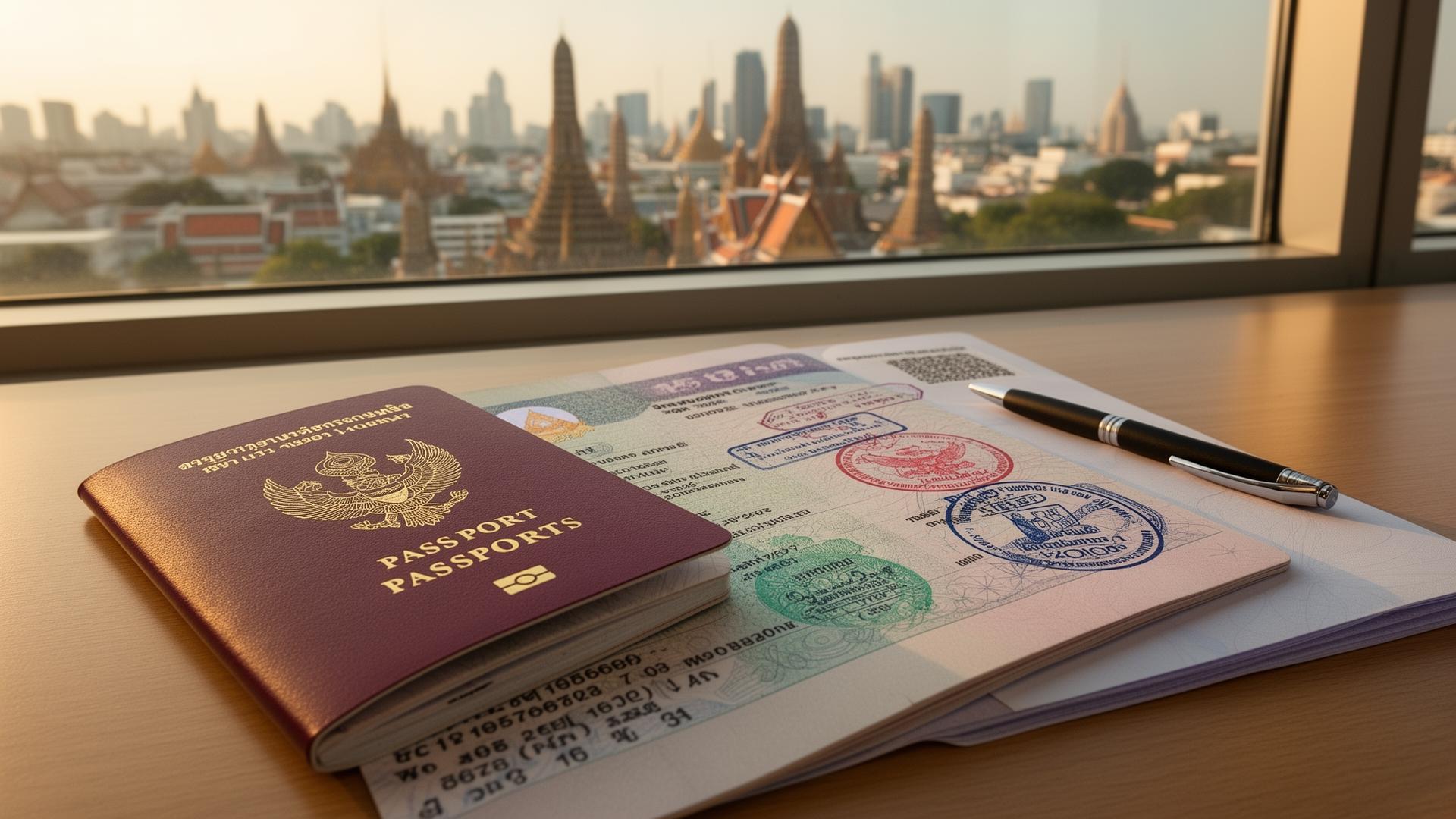
Thai Visa Extension Procedures
How to extend any Thai visa at the Chaeng Wattana Immigration office in Bangkok
Thai Visa Extension Procedures — the complete 2026 guide
Every long-term foreigner in Thailand eventually needs to extend a visa. The process happens at Immigration offices across the country, with the main Bangkok office at Chaeng Wattana (Government Complex Building B, Muang Thong district). Provincial offices (Pattaya, Phuket, Chiang Mai) handle regional applicants and are often faster and less crowded than Chaeng Wattana. All extensions cost 1,900 THB in official government fees regardless of visa type. Extension rules and duration vary widely by category — from 30-day tourist extensions to 1-year Non-B renewals.
The critical rule: apply BEFORE your current stamp expires. There is no grace period. The '45-day grace period' myth still circulates on expat forums but is false. Extensions submitted on the actual expiry day are usually accepted; a single day late means overstay penalties (500 THB/day, up to 20,000 THB max, plus possible entry bans). Book extension appointments 30–60 days in advance for Chaeng Wattana (via the online queue system at bangkok.immigration.go.th). Some documents like the Thai bank letter for retirement extensions take 3–7 days to obtain, so plan backwards from your visa expiry.
Documents differ by visa type but always include: original passport + copies of every stamped page, TM.7 application form (available at all Immigration offices or downloadable at immigration.go.th), one 4×6 cm photo, 1,900 THB fee, and category-specific evidence (financial statements, employer letters, marriage certificate, school attendance). Overstay penalties are strict: 500 THB per day up to 20,000 THB, then possible re-entry bans of 1 year (7–90 day overstay) to 10 years (5+ years). Voluntary self-report before immigration finds you is treated more leniently. See individual visa pages for category-specific procedures: /ltr-visa, /dtv-visa, /business-visa, /spousal-visa, /retirement.
Who qualifies
Anyone with a valid Thai visa or visa exemption seeking to extend their permitted stay before it expires.
Processing time
Same-day (well-prepared applications) to 30 days
Issued by: Thai Immigration Bureau (Chaeng Wattana in Bangkok)
Government fees
Documents you'll need
- Original passport with valid visa stamp
- TM.7 application form (available on-site or download)
- Copies of passport photo page, visa stamp page, entry stamp page, TM.30 accommodation registration
- One recent 4×6 cm photo (colour, white background)
- Category-specific evidence: financial statements, employer letters, marriage certificate, school records
- 1,900 THB in cash (some offices accept card)
Application process, step by step
- 1
Verify your visa's expiry date
Check the entry stamp in your passport (last stamped 'Admitted Until' date) and your visa stamp. These may differ. The stamp inside your passport is the ruling date. Aim to submit your extension at least 15 days before this date — 30 days is safer for Non-B and Non-O extensions where paperwork issues can force delays.
- 2
Book a queue slot online
For Chaeng Wattana, use bangkok.immigration.go.th to book an appointment slot 30–60 days in advance. Slots fill quickly for peak categories (retirement, marriage). Provincial offices in Phuket, Chiang Mai, and Pattaya usually accept walk-ins but appointment booking is still recommended in high season (November–February).
- 3
Collect your documents
The universal documents are your passport, TM.7 form, photo, and 1,900 THB. Then add category-specifics: for Non-B, employer packet + payslips; for Non-O retirement, bank letter + 800k THB seasoned in Thai account; for Non-O marriage, spouse's Thai ID + house registration + 400k deposit or income evidence; for ED, school attendance record. Photocopy everything twice.
- 4
Arrive early on the day
Chaeng Wattana opens at 08:30. Arrive by 07:30–08:00 to secure a good queue position. Bring water and snacks. The extension process typically takes 2–4 hours from queue to payment collection, depending on how busy the day is and your category (Non-B extensions with heavy employer paperwork take longer than tourist extensions). Provincial offices are much faster.
- 5
Submit + wait for review
Present your file at the appropriate counter. Officers review documents on the spot; missing items may result in you being asked to return with corrections. Well-prepared files receive same-day approval and a fresh stamp in the passport. Complex extensions (first Non-B conversion, marriage-visa home-visit followups) may be issued a 'pending' stamp requiring return in 30 days.
- 6
Get a re-entry permit if leaving Thailand
Extended visas are invalidated the moment you leave Thailand unless you buy a re-entry permit first. Single re-entry costs 1,000 THB, multiple 3,800 THB (valid 12 months). Buy at the same Immigration office on the same day as your extension, or at the airport before your flight (small premium). Failure to buy means your visa is destroyed on exit and you re-apply from scratch.
Advantages
- Standardised — same 1,900 THB fee regardless of visa type
- Provincial offices often much faster than Chaeng Wattana
- Online booking system reduces wait times
- In-country extensions save cost of foreign embassy visits
- Most extensions issue same-day for well-prepared applicants
Drawbacks
- Chaeng Wattana notoriously slow and crowded
- No grace period — one day late = overstay penalties
- Documentation requirements can be labyrinthine (bank letters, employer papers, spouse attendance)
- Complex categories may need multiple visits before approval
- Overstay can trigger 1-year to 10-year re-entry bans
You Might Also Like
Sources & official references
- Thai Immigration Bureau — TM.7 form download, current extension fees, and overstay rules.
- Chaeng Wattana Bangkok Immigration — Online queue booking system for Bangkok extensions.
- TM.47 90-day reporting — Online 90-day self-report portal (free).
UK expat living in Bangkok since 2019 — LTR-visa holder since the 2023 Highly-Skilled Professional launch and previously an ex-BBC South-East-Asia stringer. Covers every visa category, work-permit process, tax reform, and long-stay pathway on the site. Files original walkthroughs from the actual Chaeng Wattana and BOI counters, and cross-checks every fee against the source ministry.
Last updated: 2026-07