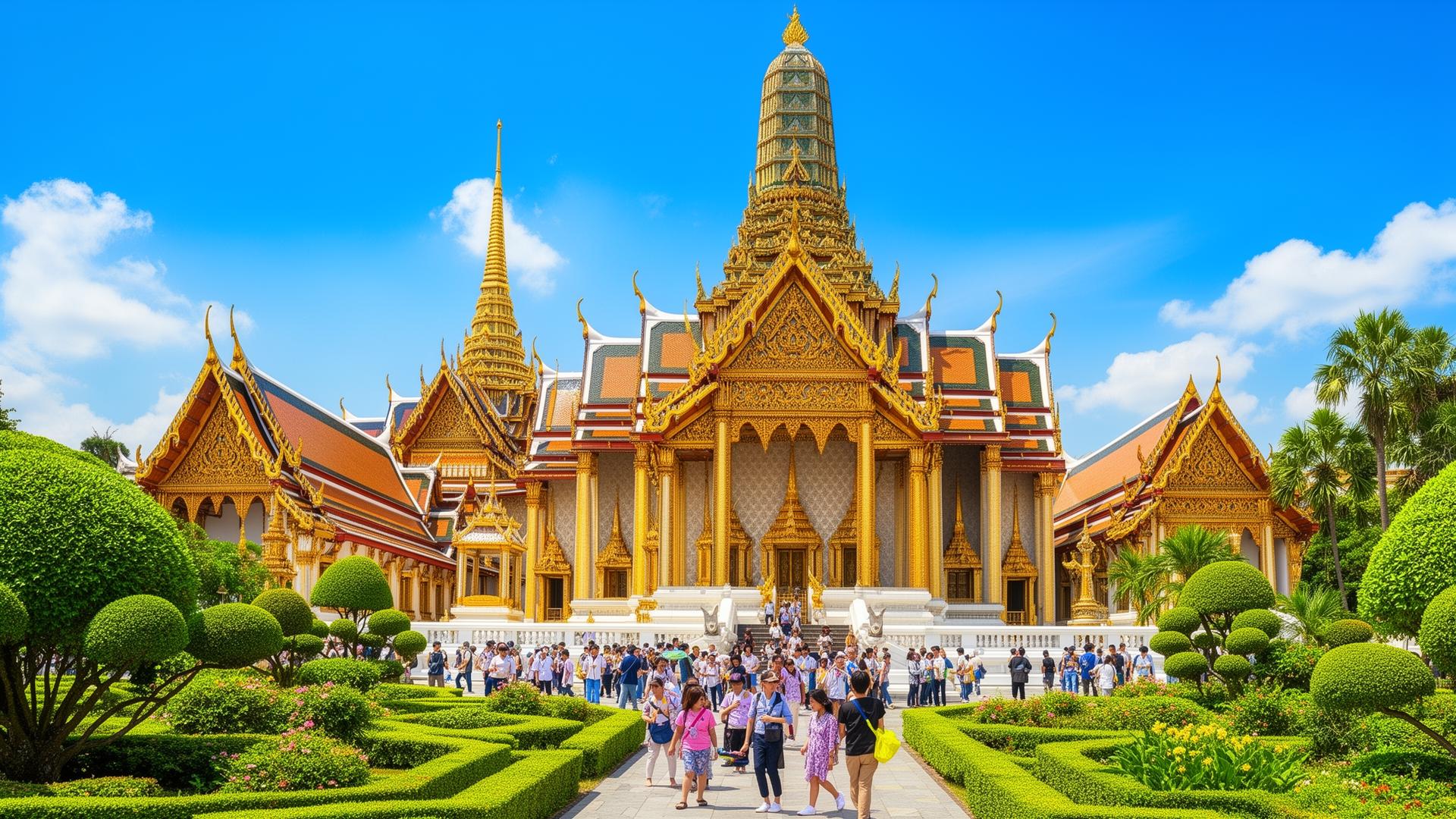
Bangkok vs Saigon
Southeast Asia's two mega-hubs — one on rails, one on scooters
Bangkok vs Saigon
Bangkok and Ho Chi Minh City (Vietnamese: Thành phố Hồ Chí Minh, still commonly called Saigon by locals for the central districts) are the two economic capitals of continental Southeast Asia. Bangkok has 11 million residents and Suvarnabhumi as one of Asia's largest international hubs; Saigon has 9.3 million registered residents in a much denser footprint, and Tan Son Nhat airport bursting at its capacity while the new Long Thanh International Airport ramps up 40 kilometres east for a 2026 partial opening. Both are French-influenced in architecture (Saigon much more heavily), both are Buddhist-majority with strong Chinese diaspora business classes, and both anchor rapid-growth service economies. Yet they feel completely different at street level. Bangkok is a car and BTS-Skytrain city — you move on rails or in gridlock. Saigon is a motorbike city — 8.5 million registered scooters weave through junctions where formal traffic rules are treated as gentle suggestions.
Cost of living tilts to Saigon but not by as much as Vietnamese-lower-tier-country reputation implies. Rent for a comparable one-bedroom serviced apartment in District 1 (Thao Dien in District 2 for expats with kids) runs USD 700 to 1,100 per month versus USD 750 to 1,200 for Sukhumvit — nearly identical. Food is where Saigon wins on absolute price: banh mi at USD 1, pho at USD 2, egg coffee at USD 1.50, versus Thai equivalents at USD 1.50, 2.50, and 3.50. But food quality per dollar in Bangkok is arguably higher — the street pad kra pao is stunning even by regional standards. Coffee culture is Saigon's clear win: Vietnam is the world's second-largest coffee exporter, and independent-cafe density in Districts 1 and 3 is comparable to Melbourne or Berlin. Bangkok has caught up with third-wave specialty coffee but still trails on price and volume.
Infrastructure is Bangkok's decisive advantage in 2026. The BTS Skytrain and MRT cover 200+ kilometres of dual-metro lines; Saigon Metro Line 1 finally opened in December 2024 after 12 years of construction and covers a single 19.7-kilometre stretch. Full metro build-out is years away. Bangkok's expat visa access is dramatically simpler — Vietnam's residence permit requires employer sponsorship or investment, and even the new digital-nomad-friendly Golden Visa proposals are less mature than Thailand's DTV and LTR. Healthcare goes to Bangkok clearly: Bumrungrad and Samitivej treat medical tourists from Ho Chi Minh City routinely. Where Saigon quietly wins is atmosphere — a raw, gritty, coffee-scented, motorbike-humming character that many long-term expats prefer to Bangkok's more polished malls. Cross-link to /cost-of-living, /digital-nomad-guide, /dtv-visa, /ltr-visa, /bangkok-hospital.
Quick verdict
Choose Bangkok for a full metro network, easier long-term visas, world-class private hospitals, wider English coverage, and better international flight connectivity. Choose Saigon for cheaper street food and coffee, denser artsy neighbourhoods (Districts 1, 3, and Thao Dien), a rougher and more energetic street life, and a rent that lasts longer for the same dollar in the mid-range. Bangkok wins on objective infrastructure and expat-support metrics; Saigon wins on food-and-coffee culture per dollar and character.
Side-by-side comparison
| Dimension | Bangkok | Ho Chi Minh City (Saigon) | Winner |
|---|---|---|---|
| Cost of living (single expat) | ~USD 1,400/month typical | ~USD 1,150/month typical | Ho Chi Minh City (Saigon) |
| Street food price (bowl of noodles) | 50-80 THB (~USD 1.50-2.30) | 30-60k VND (~USD 1.20-2.30) | Ho Chi Minh City (Saigon) |
| Coffee culture | Strong specialty scene, catching up | World's #2 coffee exporter, dense cafes | Ho Chi Minh City (Saigon) |
| Public transport | BTS + MRT + ARL, 200+ km | Metro Line 1 only (19.7 km, Dec 2024) | Bangkok |
| Traffic | Car gridlock, but rails escape it | 8.5m motorbikes weaving; slow but flowing | Bangkok |
| Air quality | PM2.5 40-130, spikes Jan-Mar | PM2.5 60-150 year-round motorbike smog | Bangkok |
| Nightlife | Massive, diverse, LGBTQ+, till 3am | Bui Vien backpacker + Thao Dien craft-beer | Bangkok |
| English proficiency | Good in tourist/CBD zones | Weaker outside D1/Thao Dien | Bangkok |
| Long-term visa access | DTV, LTR, retirement, elite — plentiful | Employer sponsor or investment needed | Bangkok |
| Private healthcare | Bumrungrad, BNH, Samitivej world-class | FV Hospital + Vinmec — good, not top-tier | Bangkok |
| Digital nomad friendliness | DTV hub, dense coworking, DE-visa easier | Popular but visa harder, less community | Bangkok |
| Culture & history | 400+ temples, palaces, museums | War Remnants Museum, French quarter, pagodas | Draw |
| International flight hub | Suvarnabhumi 100+ dest, hub for SE Asia | Tan Son Nhat capped; Long Thanh partial 2026 | Bangkok |
| Beach access (weekend) | Hua Hin 3h, Pattaya 1.5h drive | Vung Tau ferry 90min, Mui Ne 4h | Draw |
Choose Bangkok if…
- You need a metro system covering the whole CBD, not a single line.
- You want a five-year multi-entry Destination Thailand Visa (DTV) for 10,000 THB.
- You need world-class private hospitals within 30 minutes.
- You want a full international-flight hub with 100+ direct destinations.
- You value stronger English coverage in supermarkets, banks, and government offices.
- Your career depends on a large expat professional network (finance, tech, media, F&B chefs).
Choose Ho Chi Minh City (Saigon) if…
- You want the cheapest possible daily food and coffee spend under USD 15 per day.
- You are a coffee obsessive and want to be inside the world's second-largest producer.
- You prefer a raw, motorbike-driven urban feel over Bangkok's mall-and-metro polish.
- You want to base close to Vietnam's growing manufacturing and tech scene (Cat Lai, Thao Dien, Thu Duc).
- You already have a Vietnamese employer sponsor or investor route sorted.
- You want a smaller expat scene with a stronger French-and-Australian community than Bangkok's British-and-American mix.
You Might Also Like
Sources & official references
- Numbeo Bangkok vs Ho Chi Minh City — Crowd-sourced cost index with rent and food comparisons
- Vietnam Immigration e-visa portal — Official 30-day e-visa for most Western passports
- HCMC Metro Line 1 project status — Line 1 opened December 2024, 19.7 km
- IQAir Ho Chi Minh City PM2.5 — Real-time air quality readings
Long-time Bangkok resident who has ridden every BTS line before opening, walked every soi from Sathorn to Ari, and made every overland border run at least twice. Covers transport, driving, day-trips, the 10 Bangkok-to-* destinations, safety, and the scam guides — including the ones he learned about the hard way. Rides trains and buses to verify current fares before publishing.
Last updated: 2026-07