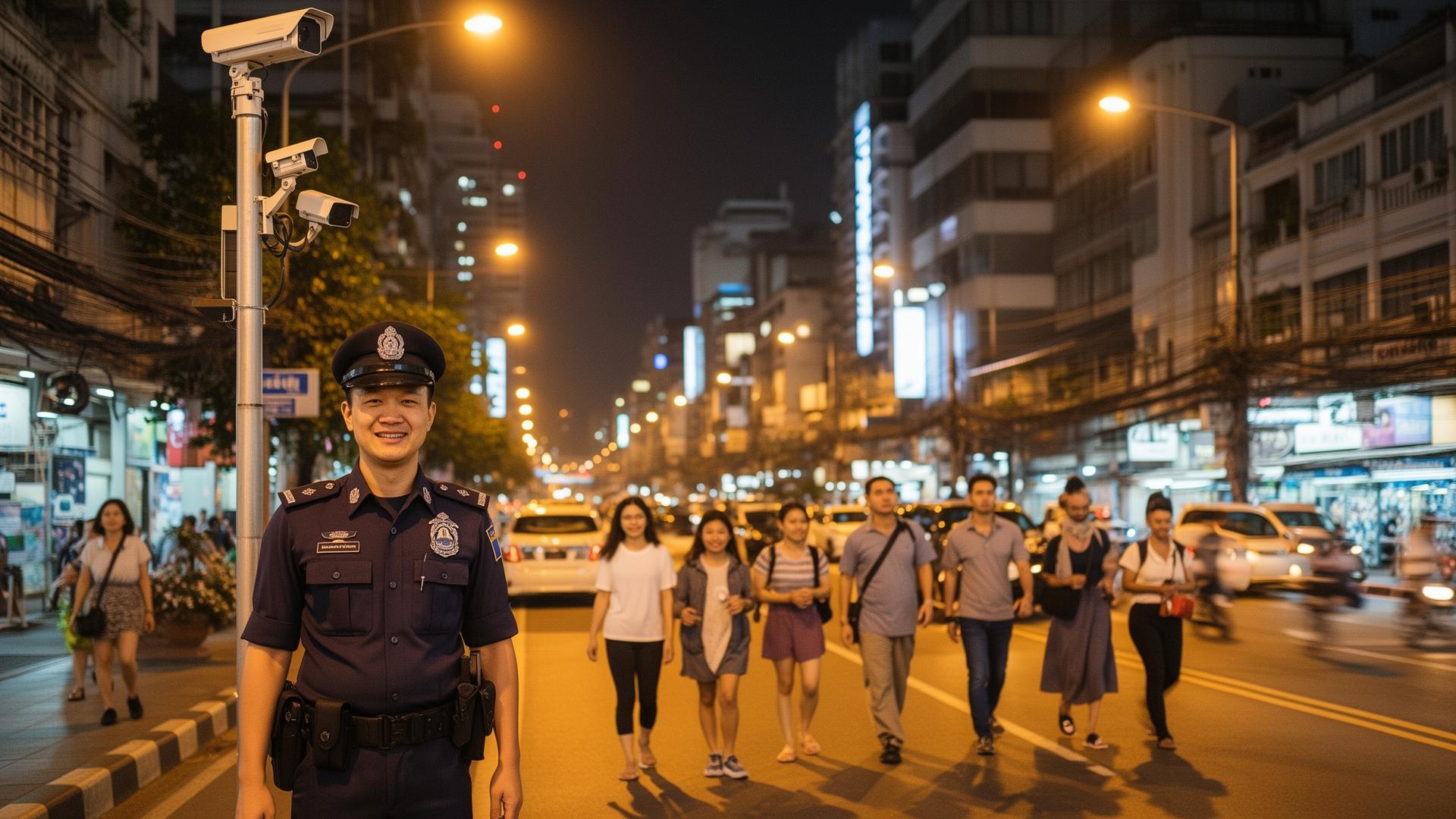
Bangkok Drink-Spiking Safety
Not a scam in the classic sense, but the most physically dangerous threat to visitors in Bangkok's nightlife zones
Bangkok Drink-Spiking Safety
Drink-spiking in Bangkok is not, strictly speaking, a scam — it is a serious violent-crime pattern that consistently targets tourists in the city's nightlife zones and combines robbery with sexual assault in a significant minority of reported cases. The UK Foreign, Commonwealth and Development Office, Australian Smartraveller, US State Department, and Canadian consular services all include drink-spiking warnings prominently in their Thailand travel advice. Because the pattern is deliberate, coordinated, and financial in outcome — the perpetrators are after wallets, phones, watches, and passports — it belongs in a scams and safety guide. The typical scenario involves a tablet dropped into a drink left unattended for as little as 30 seconds, or a drink handed over already spiked by a friendly stranger. Victims typically wake up somewhere unfamiliar hours or days later with no wallet, no phone, and no memory of the intervening period. In the majority of cases, the victim was drinking alone or briefly separated from friends when the drink was compromised. This guide covers what to do to prevent it, how to recognise the early symptoms, and what to do if you or someone you are with is affected.
The main high-risk zones in central Bangkok are Sukhumvit Soi 4 (the entrance strip to Nana Plaza), Soi 11 (with its cluster of late-night clubs and lounges), Soi Cowboy off Sukhumvit Soi 21, Khao San Road and its side sois, Silom Soi 4, and a scattering of riverside late-night bars from Charoen Krung down to Asiatique. In these zones you should treat any drink you did not personally see poured, and did not personally keep in your hand or in sight the entire time, as potentially compromised. The most common spiking agents identified in Thai hospital toxicology reports are benzodiazepines (Rohypnol and analogues), GHB, ketamine, and — in a smaller number of cases — high-dose sedatives added to spirits. Symptoms typically begin 15 to 45 minutes after ingestion: sudden dizziness disproportionate to the amount of alcohol consumed, slurred speech, blurred vision, extreme drowsiness, memory gaps forming in real time, and loss of coordination. If you feel any of these onset symptoms and cannot explain them from your drink count, get to safety immediately — a hotel lobby, a well-lit main street, or a security-staffed venue.
The most important protective habits are practical rather than paranoid: keep your drink in your hand or under your palm at all times, refuse open drinks handed to you by strangers no matter how friendly the offer, order fresh bottled beer or sealed cans and open them yourself, buddy up on any night out and pre-agree a check-in schedule, and never leave with someone you have just met without your friends knowing exactly where you are going. Bangkok's ride-hailing infrastructure via Grab is excellent and cheap — never accept a lift with a new acquaintance when a Grab back to your hotel costs 150 to 300 baht. If you or a friend show signs of spiking, treat it as a medical emergency. Call an ambulance on 1669, the Tourist Police on 1155, or, in imminent danger, the general emergency line on 191. Get to hospital fast — early treatment is important for both physical outcomes and evidence preservation if a sexual assault has occurred. For related resources see /nightlife for a safer venue guide, /embassies for the full contact list, /safety-tips for reporting, /medical-tourism for 24-hour ER options, and /embassies for consular assistance.
How the scam works, step by step
- 1
The target selection
Perpetrators observe tourists in high-density nightlife zones — Sukhumvit Soi 4 and 11, Soi Cowboy, Khao San Road, Silom Soi 4 — and identify solo drinkers, small groups where one member is more intoxicated, or tourists carrying visible high-value items like new phones and watches. They watch for a moment when a target is briefly separated from a group or has left a drink unattended to visit the bathroom.
- 2
The approach
The perpetrator, alone or in a two-person team, opens with an entirely normal-seeming conversation — asking where you are from, complimenting your accent, offering to buy a drink, or joining a group table. In bars with a mixed crowd, this looks completely unremarkable. Perpetrators are frequently well-dressed and blend with the crowd. They may spend 20 to 40 minutes building rapport before making the move.
- 3
The spiking moment
Two variants dominate. In the first, the perpetrator handles your drink briefly — 'let me hold this while you check your phone' or 'try mine, it is better' — and a fast-dissolving tablet is added. In the second, you leave the drink on the bar to visit the bathroom, and someone else — sometimes not the immediate conversational partner — adds a tablet as they pass. Modern spiking drugs are essentially undetectable by taste in mixed spirits.
- 4
The onset window
Symptoms typically begin 15 to 45 minutes after ingestion — sudden dizziness disproportionate to your alcohol intake, slurred speech, blurred vision, extreme drowsiness. The perpetrator is watching for these signs and will time their next move around them. They may offer to help you outside 'for fresh air', get you a Grab to your hotel, or invite you to their nearby place. The suggestion sounds caring.
- 5
The isolation and extraction
Once outside the venue, the perpetrator moves the target away from CCTV and witnesses — a private tuk-tuk or ride-hailing car to a short-stay hotel, apartment, or a second bar with less lighting. Isolation is the crucial step. Bar security cameras rarely track patrons beyond the entrance, and the target is now dependent on the perpetrator for wayfinding and safety.
- 6
The theft or assault
Wallets, phones, watches, and passports are removed while the victim is unconscious or heavily sedated. In a subset of cases, sexual assault occurs. The victim wakes up hours or a day later somewhere unfamiliar — sometimes back in their own hotel, sometimes in a short-stay hotel, sometimes in a park or on a beach — with no memory of the intervening period. Anything traceable is offloaded or wiped by the perpetrator before the victim regains awareness.
Exact scripts scammers use
- "You look tired my friend, let me hold your drink, you go bathroom, no problem."
- "Try my mojito, it is much better than yours, one sip only."
- "You need fresh air, come outside with me, only two minute."
- "Bad idea to go home alone, my friend has driver, we take you safe."
- "One more drink, on me, then we go dance at rooftop, very close."
Red flags — recognise these immediately
- A stranger insists on holding your drink, offers a sip of theirs, or presses you to try a specific cocktail they ordered.
- You feel dizzy, drowsy, or disoriented far beyond what your alcohol consumption should produce.
- A friendly new acquaintance urges you to leave with them urgently — 'better bar' or 'fresh air' — rather than staying in the venue.
- You cannot remember details of the last 20 to 30 minutes clearly.
- Your drink taste, colour, or consistency has changed since you last checked.
- The person offering you help is unusually attentive to your level of intoxication and pressing timing.
What to do if you're targeted
- Never leave your drink unattended, and never accept an open drink from a stranger. Order sealed beers or watch cocktails being poured.
- Buddy up on any nightlife trip. Agree a check-in schedule every 30 minutes and a hotel-return time. Share Grab receipts in a group chat.
- If you feel sudden dizziness, drowsiness, or memory disruption disproportionate to your drinks, leave the venue for a hotel lobby immediately.
- If a friend shows spiking symptoms, get them to a chair, do not let anyone else help them outside, call an ambulance on 1669, and stay with them.
- Photograph any strangers who spent time near your drinks — the photos help if you need to file a police report.
- If assaulted or robbed, go directly to a hospital ER (see /medical-tourism for 24-hour options), then Tourist Police 1155, then your embassy.
Where to report
For active emergencies dial 1669 (ambulance), 191 (general police), or 1155 (Tourist Police — English-speaking, 24/7). All calls are free from any Thai mobile or landline. After treatment at a hospital ER, file a formal report at any Tourist Police station and contact your embassy (see /embassies) for consular support, especially if a sexual assault has occurred. See /safety-tips for reporting details and /medical-tourism for 24-hour ER locations.
You Might Also Like
Sources & official references
- UK FCDO — Thailand safety and security — UK travel advice with explicit drink-spiking warnings for Bangkok nightlife zones.
- Australian Smartraveller — Thailand — Australian consular travel advice covering drink-spiking, assault reporting, and safe-drinking guidance.
- Drinkaware — drink-spiking guidance — UK charity Drinkaware's authoritative guide to spotting spiking symptoms and protective habits.
- US State Department — Thailand travel advisory — US travel advisory covering nightlife safety, drink-spiking, and steps to take if targeted.
Long-time Bangkok resident who has ridden every BTS line before opening, walked every soi from Sathorn to Ari, and made every overland border run at least twice. Covers transport, driving, day-trips, the 10 Bangkok-to-* destinations, safety, and the scam guides — including the ones he learned about the hard way. Rides trains and buses to verify current fares before publishing.
Last updated: 2026-07-01