Festivals & Events
Your guide to Bangkok's celebrations throughout the year
Bangkok's Festival Calendar
Thailand is a country that loves to celebrate. The Thai calendar is packed with festivals, public holidays, royal commemorations, and religious observances that shape the rhythm of daily life throughout the year. For anyone living in or visiting Bangkok, understanding this festival calendar is key to both enjoying the celebrations and avoiding the logistical surprises they can bring — from bank closures and traffic gridlock to surging hotel prices and sold-out transportation.
One thing that often confuses newcomers is the Thai calendar itself. Thailand uses the Buddhist Era (BE), which is 543 years ahead of the Western Gregorian calendar. So the year 2025 CE is 2568 BE. You'll see BE dates on official documents, government forms, and sometimes on event listings. The Thai calendar follows the same months as the Western calendar, but traditional Thai culture also recognizes seasonal divisions that influence when festivals fall: the cool season (November through February), the hot season (March through May), and the rainy season (June through October).
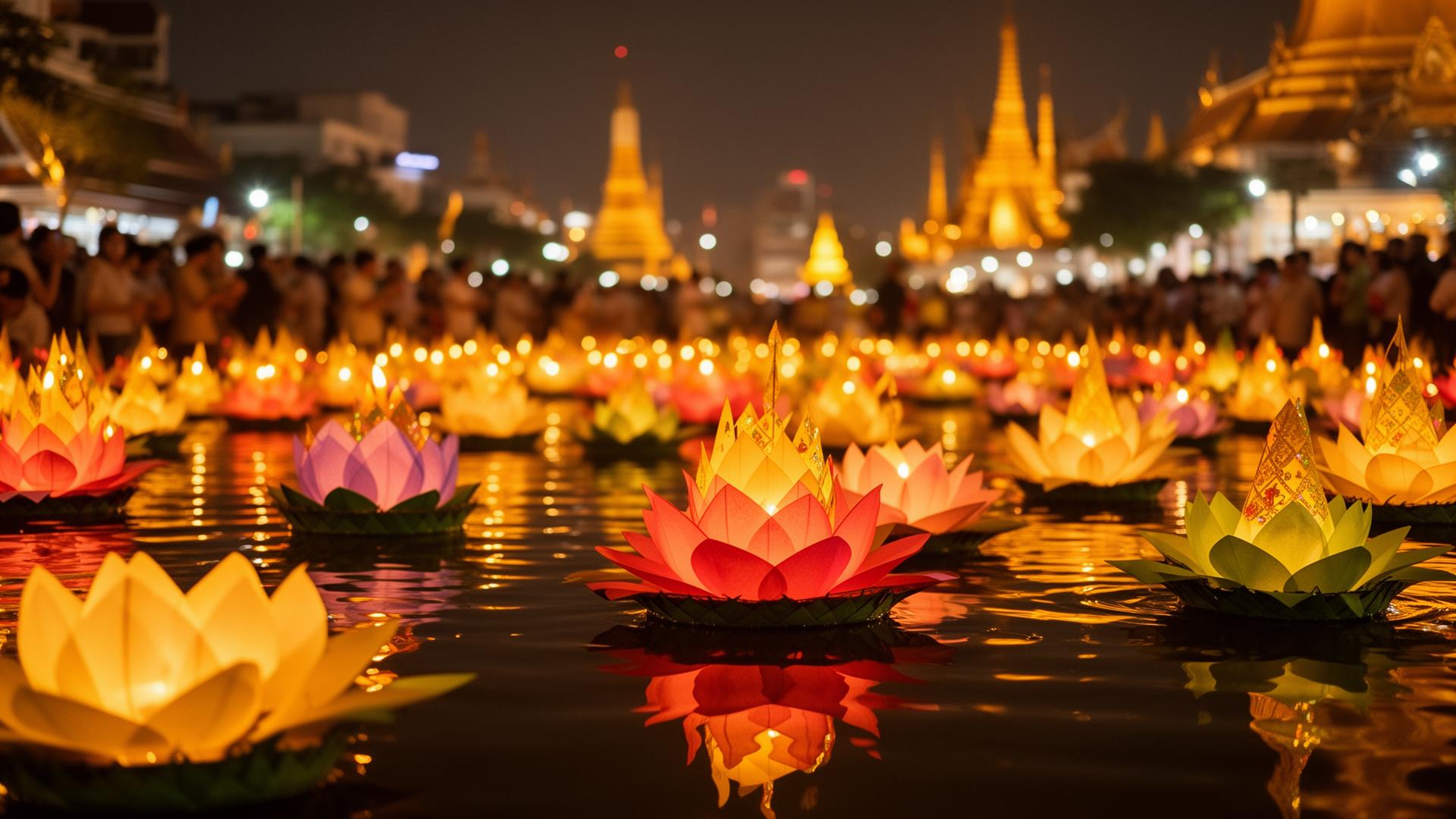
The cool season brings some of Bangkok's most pleasant festivals. Loy Krathong, usually in November, sees people releasing small lotus-shaped boats bearing candles and flowers onto rivers and canals, creating a magical floating tableau across the city. The King's Birthday and National Day in December means illuminated boulevards and elaborate royal portraits along Ratchadamnoen Avenue. Chinese New Year in January or February transforms Yaowarat (Chinatown) into a riot of red lanterns, dragon dances, and street food stalls stretching for blocks.
The hot season's crown jewel is Songkran, Thai New Year, celebrated from April 13 to 15. What began as a gentle tradition of pouring water over Buddha images and elders' hands has evolved into the world's largest water fight. Silom Road, Khao San Road, and the area around CentralWorld become massive open-air water battlegrounds where locals and tourists alike drench each other with water guns, buckets, and hoses. The entire city essentially shuts down for three to five days — many businesses close, and traffic becomes impossible. If you're in Bangkok during Songkran, embrace it fully: wear clothes you don't mind getting soaked, put your phone in a waterproof bag, and join the fun. If you prefer quiet, book a beach getaway well in advance, as domestic flights and buses sell out weeks ahead.
The rainy season coincides with Buddhist Lent (Khao Phansa), a three-month period beginning in July when monks traditionally stay within their monasteries. This is considered an auspicious time for Thai men to be ordained as monks, even temporarily. You'll notice more solemn ceremonies at temples and a general sense of spiritual observance during this period. The rainy season also brings the Vegetarian Festival in September or October, especially vibrant in Chinatown, where yellow flags mark stalls selling meat-free dishes.
Festivals have a real impact on daily life in Bangkok. During major holidays like Songkran and New Year, government offices and banks close for several days, so plan any official business around these dates. Traffic becomes significantly worse before long weekends as millions of Bangkokians head to their home provinces. Hotel prices in popular destinations can double or triple. On the positive side, Bangkok itself becomes wonderfully quiet during these exodus periods — it's actually one of the best times to explore the city if you stay behind. The calendar below covers the major festivals and events throughout the year, with tips for making the most of each celebration.