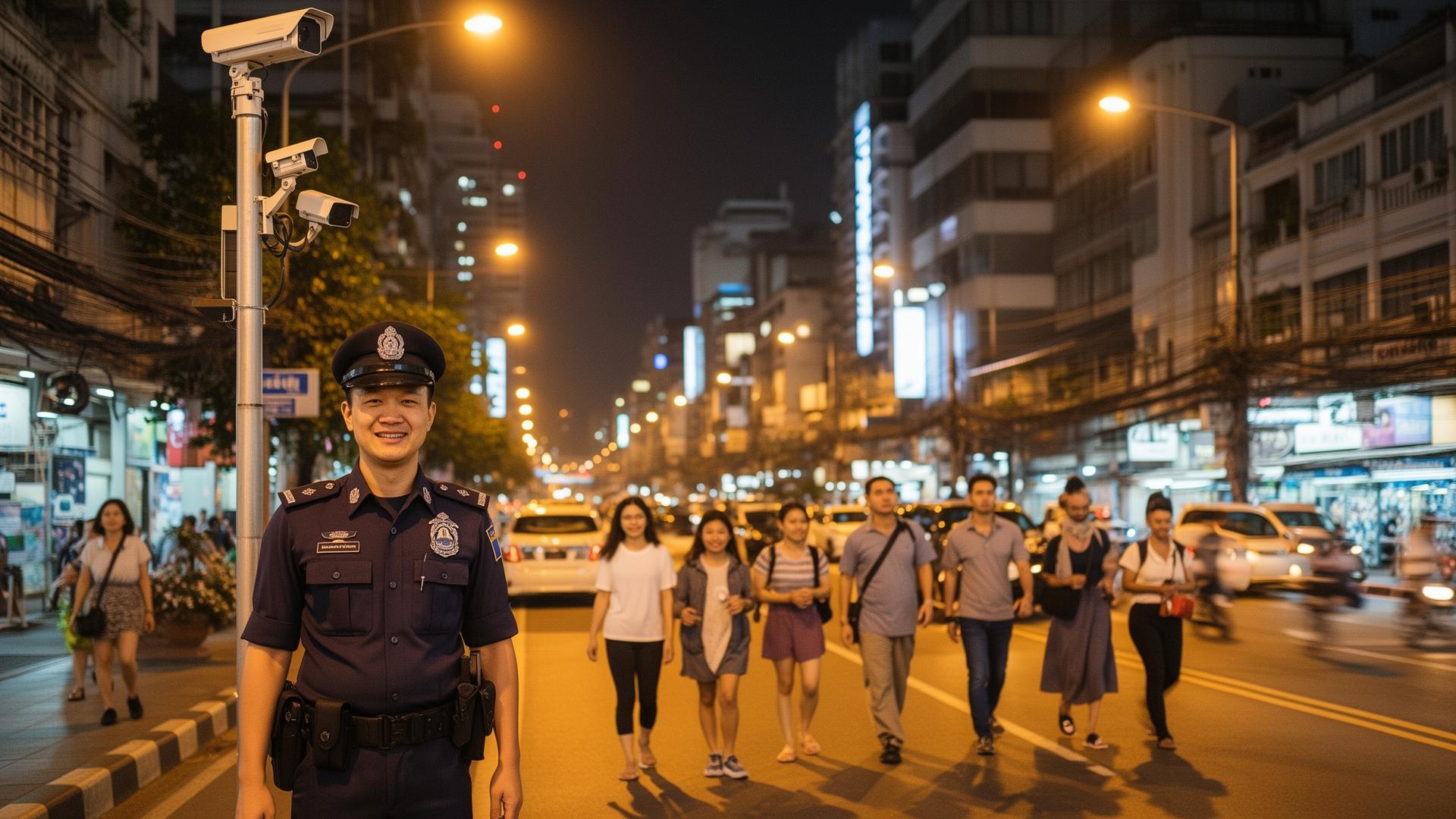
The Grand Palace 'Closed' Scam
The single opening line that leads to almost every major tourist scam in Bangkok — and why the palace is essentially never closed
The Grand Palace 'Closed' Scam
'The Grand Palace is closed today.' This single sentence is the opening line for the most persistent, most widely reported tourist scam in Bangkok. It is delivered on the pavement of Na Phra Lan Road, at the palace's northern approach, at the Sanam Luang perimeter, and at the entrances of Wat Pho and Wat Arun. The person delivering it looks helpful, speaks polite English, and often wears smart casual clothing designed to look official without triggering suspicion. Sometimes they hand you a piece of paper with 'today's Buddhist ceremony schedule'. Sometimes they gesture at what looks like a closed gate. Sometimes a friend in a fake security uniform stands nearby and nods along. Everything about the delivery is designed to sound plausible. But the underlying claim is almost always a lie. The Grand Palace is open every day of the year from 8:30am to 3:30pm, including all public holidays, most royal birthdays, and every religious festival. Wat Pho and Wat Arun are similarly open daily. Individual halls may occasionally close for restoration, but the overall complexes are essentially always accessible during opening hours.
The 'closed' claim is not the scam itself. It is the doorway. Once you accept the premise, the scammer offers a solution — a tuk-tuk driver appears and offers a 20-baht tour of 'better' temples, or a helpful stranger suggests a nearby gem sale that ends today at 5pm, or a taxi driver offers to take you to a 'special' temple with a real Emerald Buddha. Each of these solutions ends at a commission shop, most often the gem shop covered on /bangkok-gem-scam, sometimes a tailor, occasionally an overpriced 'tourist information centre'. The 'closed' line is the industry-standard opening because it exploits two things at once: a first-time visitor's uncertainty about how the palace actually operates, and the natural desire to salvage a wasted trip across town. If your plans have been derailed and someone appears with a helpful alternative, human psychology bends towards the alternative. The scammers know this, and they are counting on it. Every embassy travel advisory covers this pattern under 'gem scam' or 'tuk-tuk scam', but at its heart it is the closed-palace lie that funnels tourists into all the others.
The good news is that this scam is trivially easy to defeat once you know the pattern. You simply do not engage with anyone on the pavement telling you the palace is closed. Walk directly to the main ticket window on Na Phra Lan Road, which is inside the north gate. If the palace is genuinely closed for a state ceremony — an event that happens once every few years and is announced weeks ahead — signage at the ticket window and staff behind it will tell you, in English. On grandpalace.th you can also verify opening status the night before your visit. Real closures are covered on international news channels, not by anonymous pavement helpers. This page walks through the exact wording scammers use, the props they employ, the physical cues that give them away, and what to do if you are approached. For related information see /attractions/grand-palace for accurate opening details, /bangkok-gem-scam for the downstream sale scam, /bangkok-tuktuk-scam for the transport half, /safety-tips for a broader overview, and /safety-tips for the reporting hotline.
How the scam works, step by step
- 1
The pavement approach
A polite English-speaking Thai man in his 30s or 40s intercepts you as you walk towards the Grand Palace gate on Na Phra Lan Road. He may introduce himself as a teacher, off-duty tour guide, or civil servant on lunch break, and he opens with a variation of 'The palace is closed today, big Buddha ceremony, only Thai people allowed'. The tone is friendly and helpful rather than pushy.
- 2
The physical props
The scammer may show a printed 'ceremony schedule' with the current date and Buddhist imagery, or gesture at a genuinely closed side gate (there are several around the palace complex used for staff and deliveries) as visual proof. A confederate in a fake uniform, sometimes with a made-up badge reading 'Tourist Information' or 'Ministry of Culture', nods in confirmation from a few metres away.
- 3
The alternative attraction
Once you accept the closure claim, the scammer smoothly pivots to a suggestion. Common suggestions include the 'Standing Buddha' at Wat Intharawihan, a 'special Emerald Buddha' at a lesser temple, or the 'lucky Buddha' at a shrine you have never heard of. He waves a nearby tuk-tuk driver over and negotiates a low fixed price for you. The two are working together.
- 4
The gem-scam handoff
The tuk-tuk delivers you first to a real minor temple, then to a second temple where a third scammer casually mentions a gem export sale, then finally to the gem shop. Every stop reinforces the fiction that the tour is genuine, and by the time you reach the shop your trust has been built up over 60 to 90 minutes of scripted encounters. This is the full pipeline covered on /bangkok-gem-scam.
- 5
The private-tour variant
In a less common variant, the scammer skips the shop pipeline and instead offers a 'private tour of hidden Bangkok temples' for 1,500 to 4,000 baht. Some victims accept and receive a low-quality tour of accessible temples they could have visited themselves for the price of a Chao Phraya boat ticket. This variant is more common late in the day when scammers have run out of shop-closing hours.
- 6
The escape ambush
If you refuse the alternative and insist on entering the palace, the scammer usually gives up and moves to the next tourist — but occasionally a partner will follow you and repeat the closed claim in different words, or a fake security guard will physically block a side gate. Ignore all of them and walk to the official ticket window on Na Phra Lan Road, which is inside the north gate and staffed by Bureau of the Royal Household personnel in matching uniforms.
Exact scripts scammers use
- "Palace closed today my friend, big Buddha ceremony, only Thai people go inside."
- "Today lucky day, palace close for royal prayer, I show you special place."
- "Sorry palace closed until 1pm, king ceremony this morning, but I have better idea."
- "Grand Palace no open today, monk festival, but Wat Intharawihan Standing Buddha very special, tuktuk take you 20 baht."
- "Closed for renovation, come back tomorrow, but today I take you private tour, very good price."
Red flags — recognise these immediately
- Any pavement stranger volunteering information about the Grand Palace, Wat Pho, or Wat Arun being closed today.
- A 'security guard' in an ill-fitting uniform standing away from the actual palace ticket booth.
- Handwritten or laminated 'ceremony schedules' that do not match any listing on grandpalace.th.
- A tuk-tuk driver conveniently waiting nearby to offer a fixed 20 to 100 baht tour to an alternative attraction.
- Any 'helpful' local who offers a solution the moment you accept there is a problem.
- Someone using the phrase 'only Thai people allowed today' — the palace never operates on this basis.
What to do if you're targeted
- Ignore anyone on the pavement telling you the palace is closed and walk directly to the official Na Phra Lan Road ticket window.
- Verify closures the night before at grandpalace.th — real closures are always announced there in English and Thai.
- If a fake security guard blocks a side gate, walk to the main north gate; do not argue.
- Trust only staff wearing matching Bureau of the Royal Household uniforms behind the ticket window.
- If you feel physically intimidated, walk into the nearby Wat Pho complex, any hotel lobby, or the tourist information booth at Tha Chang pier.
- Report scammer descriptions and locations to Tourist Police 1155 — repeat operators are periodically prosecuted based on tourist reports.
Where to report
Report to Tourist Police on 1155 (English-speaking, 24/7). A physical Tourist Police kiosk stands near Tha Chang pier, a five-minute walk from the palace gate. Also see /safety-tips for follow-up procedures and /attractions/grand-palace for verified opening details.
You Might Also Like
Sources & official references
- Bureau of the Royal Household — official Grand Palace site — Definitive source for opening times, ticket prices, dress code, and any advance-notified closures.
- US Embassy Bangkok — US Embassy site with citizen services and travel warnings that reference the closed-palace scam variant.
- Tourism Authority of Thailand — official news — TAT publishes recurring campaigns against tourist scams around Rattanakosin Island tourist sites.
- UK FCDO — Thailand safety and security — UK government travel advice covering the closed-palace approach and downstream gem-shop pipeline.
Long-time Bangkok resident who has ridden every BTS line before opening, walked every soi from Sathorn to Ari, and made every overland border run at least twice. Covers transport, driving, day-trips, the 10 Bangkok-to-* destinations, safety, and the scam guides — including the ones he learned about the hard way. Rides trains and buses to verify current fares before publishing.
Last updated: 2026-07