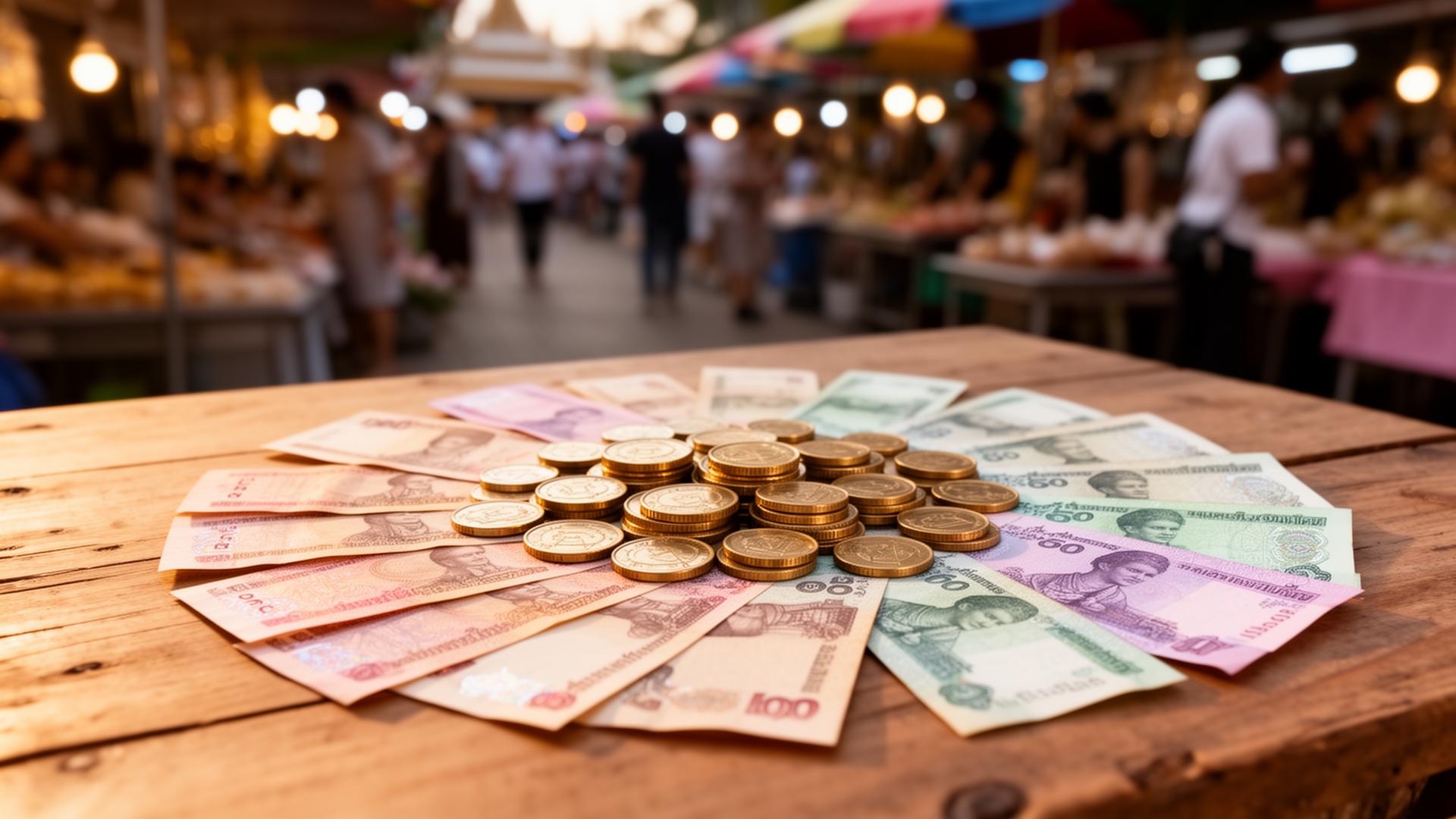
Cost of Living in Bangkok
Bangkok offers excellent value. Here's what to expect monthly for 3 lifestyle levels.
Cost of Living in Bangkok 2026
Bangkok remains one of the most affordable major cities in the world, and it is this combination of low cost and high quality of life that draws digital nomads, retirees, and expats from every continent. Your money stretches remarkably far here compared to Singapore, Hong Kong, Tokyo, or any Western capital. A comfortable life that would cost $4,000–5,000 per month in a mid-tier US city can be achieved for 50,000–75,000 THB ($1,400–2,100) in Bangkok — with better food, easier access to massages and domestic travel, and year-round warm weather thrown in. That said, costs vary enormously depending on your lifestyle choices, and it is easy to spend far more if you gravitate toward imported groceries, international school fees, or high-end Thonglor nightlife.
Think of Bangkok living in three tiers. The backpacker or tight-budget tier runs about 25,000–35,000 THB per month: you are in a basic studio or shared apartment in On Nut or Lat Phrao for 8,000–12,000 THB, eating street food and food court meals at 40–80 THB per plate, riding buses and the occasional BTS, and socializing at local bars where a large Chang beer costs 80–120 THB. The comfortable middle tier — where most long-term expats and remote workers land — is 50,000–80,000 THB per month: a modern one-bedroom condo with pool and gym near BTS On Nut or Ari for 15,000–25,000 THB, mixing street food with restaurant meals at 200–500 THB, using Grab and BTS daily, and enjoying regular dinners out, gym memberships at Jetts or Fitness First (1,500–3,000 THB/month), and weekend trips. The luxury tier starts at 100,000 THB and goes as high as you want: a two-bedroom in Thonglor or Sathorn for 45,000–80,000 THB, dining at Gaggan Anand or Sorn, a membership at the Aspire Club or Rakxa wellness, a private driver, and international school fees if you have children.
Rent is by far your biggest single expense and the one with the widest range. A basic studio near BTS Bearing or Bang Na starts at 6,000–8,000 THB per month. Move up to On Nut or Udom Suk and a decent one-bedroom with a pool runs 10,000–18,000 THB. In the expat-heavy Asok-to-Ekkamai stretch of Sukhumvit, the same unit jumps to 20,000–40,000 THB. Thonglor and Sathorn command 35,000–80,000 THB for a nice one-bedroom, and luxury two-bedrooms in developments like The Esse, Park Origin, or Banyan Tree Residences start at 60,000 THB and top out well over 150,000 THB. Always negotiate: offering to sign a 12-month lease often gets you one to two months free, and landlords are more flexible during low season (May–September). Check Facebook groups like "Bangkok Expats" and "Bangkok Condos for Rent" for direct-from-owner deals that skip agent commissions.
Food is where Bangkok truly shines on value. A plate of pad kra pao (basil stir-fry) from a street stall costs 40–60 THB. A bowl of boat noodles at Victory Monument is 15–30 THB. Mall food courts like MBK, Terminal 21, or CentralWorld serve quality meals for 50–100 THB. Step up to a proper sit-down Thai restaurant like Somtum Der or Khua Kling Pak Sod and expect 200–400 THB per person. Western restaurants, sushi, and fine dining range from 500 to 2,000+ THB per head. If you eat two street meals and one restaurant meal per day, budget about 10,000–15,000 THB per month for food. For transport, a BTS monthly pass (15 trips or unlimited by zone) costs around 1,345 THB, and the MRT equivalent is similar. A daily Grab commute averages 3,000–5,000 THB per month depending on distance.
The hidden costs that catch new expats off guard are worth understanding before you commit. Visa runs — whether border runs to Cambodia or Laos or trips to a Thai consulate in Penang or Vientiane — can cost 5,000–15,000 THB per trip including transport and accommodation, and some visa types require them every 90 days. Health insurance runs 15,000–80,000 THB per year for decent private coverage, and going without is a gamble you do not want to take. If you maintain obligations back home — student loans, a storage unit, car insurance, streaming subscriptions, phone plan — those dollars add up fast alongside your Thai expenses. Electricity bills spike during the hot season (March–May) when AC runs nonstop, easily doubling from 1,500 to 3,000+ THB per month. Food and rent inflation has been running 5–10% annually in popular expat neighborhoods since 2023, so the 2024 budget spreadsheet you found on Reddit may already be outdated. Track your spending with apps like Money Lover, Wallet by BudgetBakers, or a simple Google Sheet — most expats find their actual spending is 15–20% higher than their initial estimate until they settle into local habits.
* Estimates as of 2026. USD 1 ≈ 35 THB. Actual costs vary by area and lifestyle.
Cost by Neighborhood
Sukhumvit (Asok–Ekkamai)
High cost25,000–60,000 ฿
🚆 BTS + MRT
Expat hub, restaurants, nightlife
Silom/Sathorn
High cost20,000–55,000 ฿
🚆 BTS + MRT
Business district, rooftop bars
Ari/Phahonyothin
Medium cost15,000–35,000 ฿
🚆 BTS
Trendy local area, cafes, quieter
On Nut/Udom Suk
Low cost10,000–25,000 ฿
🚆 BTS
Budget expat zone, local feel
Ratchadaphisek
Medium cost12,000–28,000 ฿
🚆 MRT
Thai middle-class, night markets
Charoen Krung/Riverside
Medium cost15,000–45,000 ฿
🚆 Boat + limited BTS
Hipster/artistic, galleries, old town charm
Lat Phrao/Ratchayothin
Low cost8,000–20,000 ฿
🚆 MRT + BTS
Very local, big malls, less English
Bang Na/Bearing
Low cost8,000–18,000 ฿
🚆 BTS
Quiet suburb, mega malls
Money-Saving Tips
Eat street food for 2 meals/day — save 10,000+ ฿/month vs restaurants
Use BTS/MRT monthly passes if commuting daily
Negotiate rent — 1-year contracts often get 1-2 months free
Mall food courts = 50–100 ฿ meals vs 300+ ฿ restaurants
Use Grab promos — new users get significant discounts
Shop at Big C, Lotus's for groceries vs 7-Eleven for 30–50% savings
Join Bangkok expat FB groups for secondhand furniture/items
Health Land massage = 500 ฿ vs hotel spas = 2,000+ ฿
Compared to Other Cities
💡 Bangkok is 50–70% cheaper than Singapore, Hong Kong, and major Western cities.
Bangkok Knowledge Editorial
Verified teamA team of long-term Bangkok residents and travel writers — expats, journalists, and local Thai contributors — who fact-check every guide against on-the-ground experience and official sources.
Last updated: 2026-06