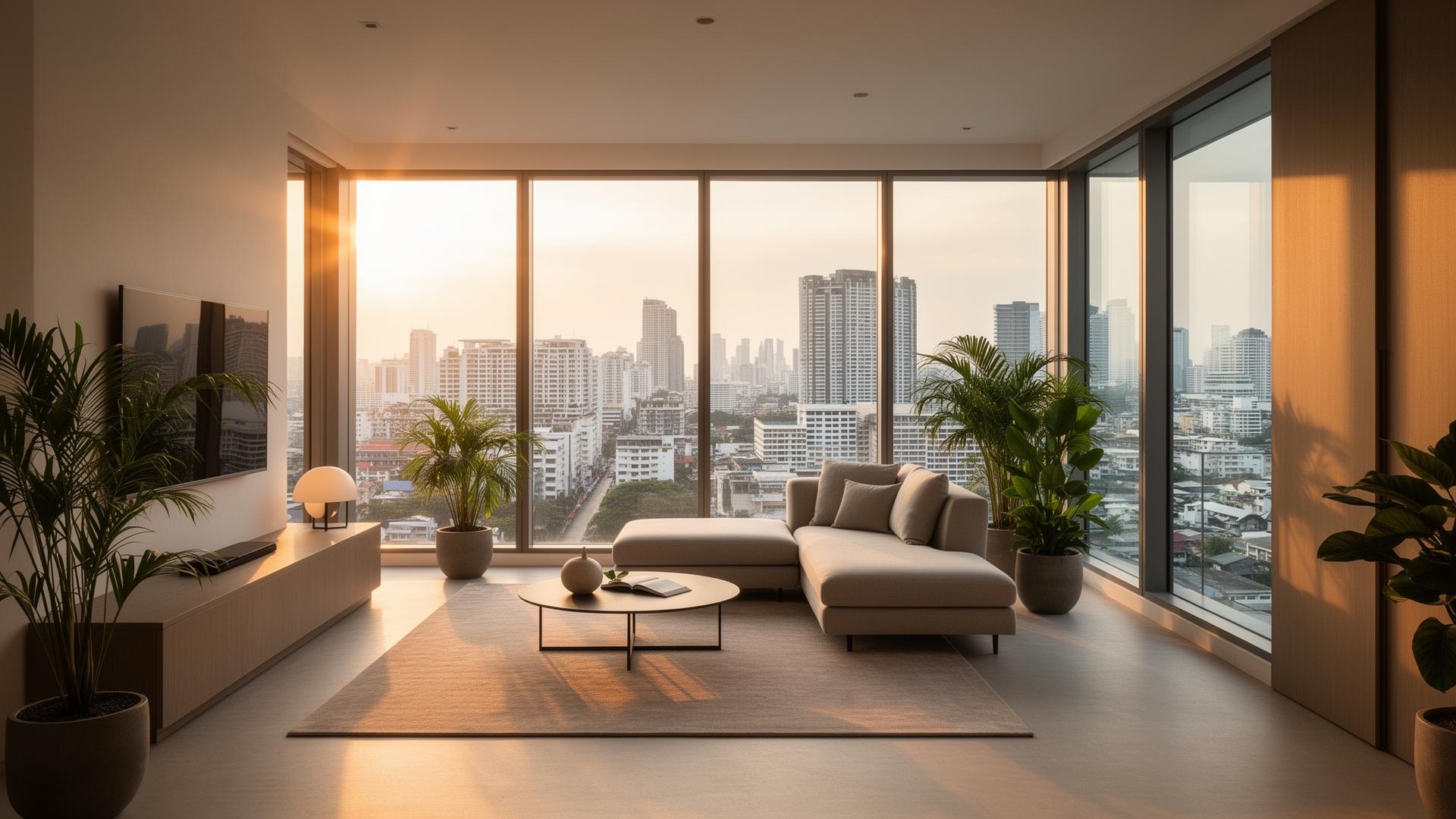
Buying Property in Bangkok
Condo ownership for foreigners — the 49% quota, the FET certificate, fees, lawyers, and how not to get scammed
Foreign Property Ownership in Thailand
Thai property law allows foreigners to own condominium units outright in their own name, but prohibits foreigners from owning land — even a single residential plot. For a condo, the legal limit is the building-wide 49% foreign ownership quota: as long as the building's total foreign-owned floor area stays at or below 49%, additional foreign buyers can register units in their own names with full freehold title. Most central-Bangkok new launches sell their foreign quota quickly; once it's full, foreign buyers must wait for a Thai owner to sell or buy on the resale market in another building.
Land is a different story. A foreigner cannot directly own a freehold land plot under any circumstance — not by virtue of long residence, marriage to a Thai citizen, or any pre-purchase arrangement. The legal workaround for foreigners who want a house rather than a condo is the long-term land lease: typically a 30-year registered lease with a contractual option to renew for another 30 years, while the foreigner owns the physical structure outright (the structure is treated separately from the land for ownership purposes). Beware the nominee structure — using a Thai company you control to 'own' land for you is illegal under the Foreign Business Act and can result in confiscation if challenged.
The single most important document in a condo purchase is the Foreign Exchange Transaction (FET) form, sometimes still called Tor Tor 3. The Land Department will refuse to register the title transfer without an FET (or multiple FETs adding up to the full purchase price) proving the money came into Thailand from abroad in foreign currency. The receiving Thai bank produces it for every inward wire of 50,000 USD or more — you must request it explicitly at the time of transfer or shortly after. Forget the FET and you've just paid for a condo you cannot legally own. The second most important is a competent Thai property lawyer (20,000–50,000 THB for a standard condo deal): they do the Land Office title search, check the sale contract clause by clause, verify the foreign-quota letter, and physically attend the transfer with you. Skipping this step to save 0.5% of the purchase price is the most common and expensive mistake foreigners make in Thai property.
Purchase Process Step-by-Step
- 1
Confirm the unit's foreign-quota availability in writing from the juristic person (condominium management). Walk away if they won't put it in writing.
- 2
Sign a Reservation Agreement and pay a small reservation fee (typically 50,000–200,000 THB) to take the unit off the market for ~30 days.
- 3
Hire a Thai property lawyer to run a Land Office title search, check the sale contract, and verify the seller's authority.
- 4
Sign the Sale and Purchase Agreement (SPA) and pay the deposit (usually 10–30%) into the seller's account or escrow.
- 5
Wire the remaining purchase funds from abroad in foreign currency. Get the FET (Foreign Exchange Transaction) certificate from your Thai bank.
- 6
Attend the Land Office for the transfer. Your lawyer brings the SPA, FET, building's foreign-quota letter, your passport, and pays the transfer fees on your behalf.
- 7
Receive the title deed (Chanote) and condominium ownership certificate in your name. The transfer takes ~2 hours at the Land Office.
Closing Costs Breakdown
Transfer fee (2% of appraised value)
Paid at Land Office. Often split 50/50 buyer/seller.
Specific Business Tax (3.3%) OR Stamp Duty (0.5%)
Specific Business Tax if seller held the unit < 5 years; Stamp Duty otherwise. Normally paid by seller.
Withholding Tax (~1–5% of value)
Sliding scale by seller's holding period; paid by seller from the proceeds.
Legal & due diligence fees
20,000–50,000 THB for a standard condo purchase. Paid by buyer; the most valuable line in this list.
Annual common-area fees
30–80 THB/m²/month for typical Bangkok condos. A 35 m² unit runs 12,600–33,600 THB/year.
This guide is general information, not legal advice
Thai property law has many exceptions and the regulations evolve. Always engage a licensed Thai property lawyer for any actual transaction. Reputable firms with strong English-language service include Tilleke & Gibbins, Siam Legal International, Mahanakorn Partners, and ILO Solutions.