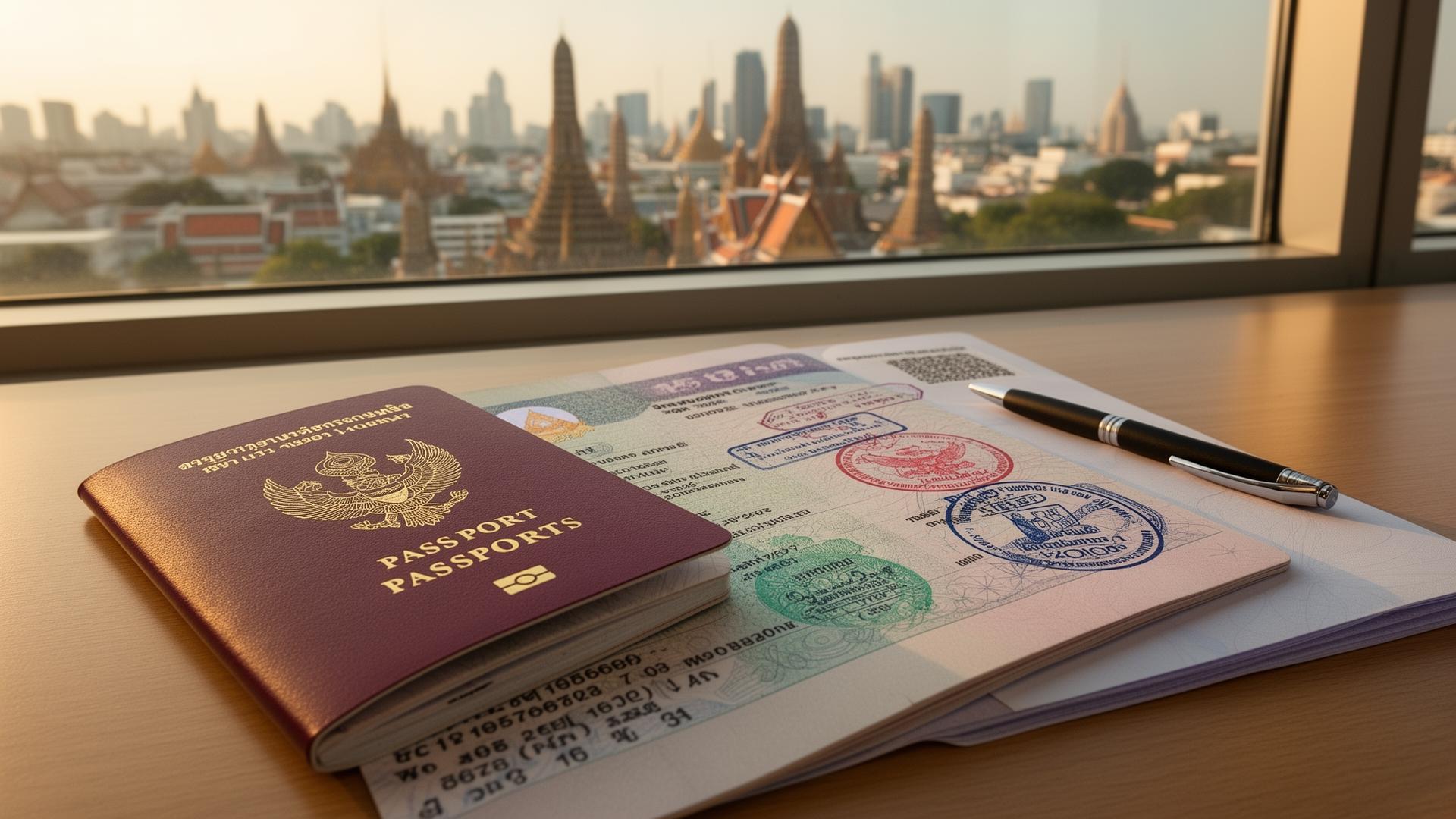
Thailand LTR Visa
The 10-year long-term resident visa for wealthy investors, pensioners, and remote professionals
Long-Term Resident Visa — the complete 2026 guide
The Long-Term Resident (LTR) Visa is Thailand's answer to Singapore's Global Investor Programme and Malaysia's MM2H — a decade-long residence permit engineered to attract high-net-worth individuals, retired professionals, and remote-working knowledge workers whose spending power the Thai economy wants to capture. Launched in September 2022 by the Thailand Board of Investment (BOI) rather than the Immigration Bureau, it is deliberately positioned as an investment-attraction tool. The one-time government fee is 50,000 THB (about USD 1,400) — an order of magnitude cheaper than Thailand Privilege — and it bundles in a digital work permit valid alongside the visa, eliminating the parallel Ministry of Labour paperwork that normally weighs down foreign workers.
There are four eligibility categories, each with its own financial and documentary bar. Wealthy Global Citizens must show USD 1 million in assets plus USD 80,000 personal income for the past two years plus USD 500,000 investment in Thai property, government bonds, or approved direct investment. Wealthy Pensioners (age 50+) need USD 80,000 annual passive income, or USD 40,000 plus a USD 250,000 Thai-side investment. Work-from-Thailand Professionals (the digital-nomad-adjacent category) need USD 80,000 annual income for two years working for a listed public foreign company OR a company with USD 150 million turnover, plus five years relevant experience. Highly-Skilled Professionals cover targeted-industry experts (S-curve industries: biotech, robotics, EV, aerospace, medical hub) with USD 80,000 income, PhD or 5+ years experience, and Thai employer sponsorship.
The practical benefits, beyond the 10-year length itself, are substantial. Annual immigration reporting once per year rather than every 90 days; separate fast-track lanes at Suvarnabhumi and Don Mueang international arrivals; a permanent work permit built into the LTR card; spouse and children under 20 included automatically for the same 50k THB fee (up to 4 dependents); and a personal-income-tax cap at 17 percent for the Highly-Skilled category. Application runs through the LTR portal at ltr.boi.go.th — you submit documents online, receive an eligibility endorsement (typically 4–8 weeks), then present the endorsement at a Thai embassy abroad or at Chaeng Wattana in Bangkok for the visa stamp itself. Health insurance with USD 50,000 coverage is mandatory for all applicants. Cross-link to /digital-nomad-guide for the WFTP category, /retirement for pensioners, /expat-taxes for the tax cap.
Who qualifies
Wealthy globals, wealthy pensioners aged 50+, work-from-Thailand professionals with a foreign employer, and highly-skilled professionals in target industries.
Processing time
6–12 weeks after eligibility endorsement
Issued by: Thailand Board of Investment (BOI)
Government fees
Documents you'll need
- Passport valid at least 6 months
- Health insurance policy with USD 50,000 minimum coverage
- Financial documents proving category eligibility (bank statements, tax returns, investment certificates, income statements — last 2 years)
- Employment contract or company registration for WFTP / Highly-Skilled categories
- Criminal record clearance from home country (some nationalities)
- Recent passport-sized photos
- Detailed CV showing relevant experience
- Property title deed OR investment contracts if using Thai investment as qualifier
Application process, step by step
- 1
Create an account at ltr.boi.go.th
The application is fully online. Register with an email you'll monitor for at least 3 months. Select your target category (Wealthy Global Citizen, Wealthy Pensioner, WFTP, or Highly-Skilled Professional) — you cannot change it later without starting over.
- 2
Upload financial and category documents
Bank statements (last 12 months), tax returns (last 2 years), asset valuations, and employment contracts. Files are 5 MB PDF max each; over-size uploads silently fail. Use certified translations if not originally in English or Thai. WFTP applicants must attach employer proof: company registration + turnover proof (public filings) OR a listing on a recognized exchange.
- 3
Purchase and upload compliant health insurance
The policy must show at least USD 50,000 medical coverage and cover you inside Thailand. Cigna Global, Allianz, and BUPA all offer compliant policies. Local Thai insurers (Muang Thai, Bangkok Insurance) also work if you request the LTR-compliance letter. Upload the policy schedule + confirmation letter naming Thailand.
- 4
Wait for BOI eligibility endorsement
The BOI reviews your case in 4–8 weeks. Expect follow-up requests through the portal — respond within 30 days or the case closes. Once approved you receive a QR-coded endorsement letter valid 60 days for the visa stamp. Do not book flights to Thailand yet; the endorsement is not the visa.
- 5
Book a visa-stamp appointment
You can stamp the visa either at a Thai embassy abroad (US, UK, EU embassies process in 1–2 weeks) or at the LTR Unit inside the One-Stop Service Centre for Visas and Work Permits at Chaeng Wattana in Bangkok. In-country stamping requires you to already hold a valid Thai visa (tourist, exemption, Non-B, etc.) at the time of the appointment.
- 6
Register the LTR card + biometrics
At the Chaeng Wattana LTR Unit you provide fingerprints + a photo and receive your LTR card the same day. The physical card holds your 10-year permission and doubles as a digital work permit. Keep it with your passport — you present it at every immigration re-entry.
Advantages
- 10 years of residency (5 + 5 renewable) with only annual reporting
- Digital work permit built into the visa — no separate Ministry of Labour paperwork
- Personal-income-tax cap at 17% for Highly-Skilled Professionals
- Includes spouse and up to 4 dependents at no extra fee
- Fast-track lanes at Suvarnabhumi and Don Mueang international arrivals
- Multi-entry stamps and unlimited overseas travel
Drawbacks
- High financial bar — USD 80k income or USD 1M assets for most categories
- 50,000 THB non-refundable fee even if BOI rejects
- WFTP category excludes freelancers without a formal employer
- Health-insurance minimum USD 50k coverage adds annual cost
- You must maintain the qualifying income/investment throughout the visa's life or face non-renewal
Long-term expat health cover — SafetyWing Remote Health
Cover that meets LTR-visa insurance requirements (USD 50k+ medical). Renewable annually, portable across countries.
Affiliate link — we may earn a commission. Does not affect our recommendations.Learn more
Move funds to Thailand for your LTR application
Wise uses the real exchange rate and charges a transparent flat fee. Popular with expats over Western Union / bank SWIFT.
Affiliate link — we may earn a commission. Does not affect our recommendations.Learn more
You Might Also Like
Sources & official references
- BOI LTR Portal — The official application system + current fee schedule.
- BOI LTR overview — Programme background, benefits, and current amendments.
- Thai Immigration Bureau — Chaeng Wattana LTR Unit hours, forms, and biometrics info.
UK expat living in Bangkok since 2019 — LTR-visa holder since the 2023 Highly-Skilled Professional launch and previously an ex-BBC South-East-Asia stringer. Covers every visa category, work-permit process, tax reform, and long-stay pathway on the site. Files original walkthroughs from the actual Chaeng Wattana and BOI counters, and cross-checks every fee against the source ministry.
Last updated: 2026-07