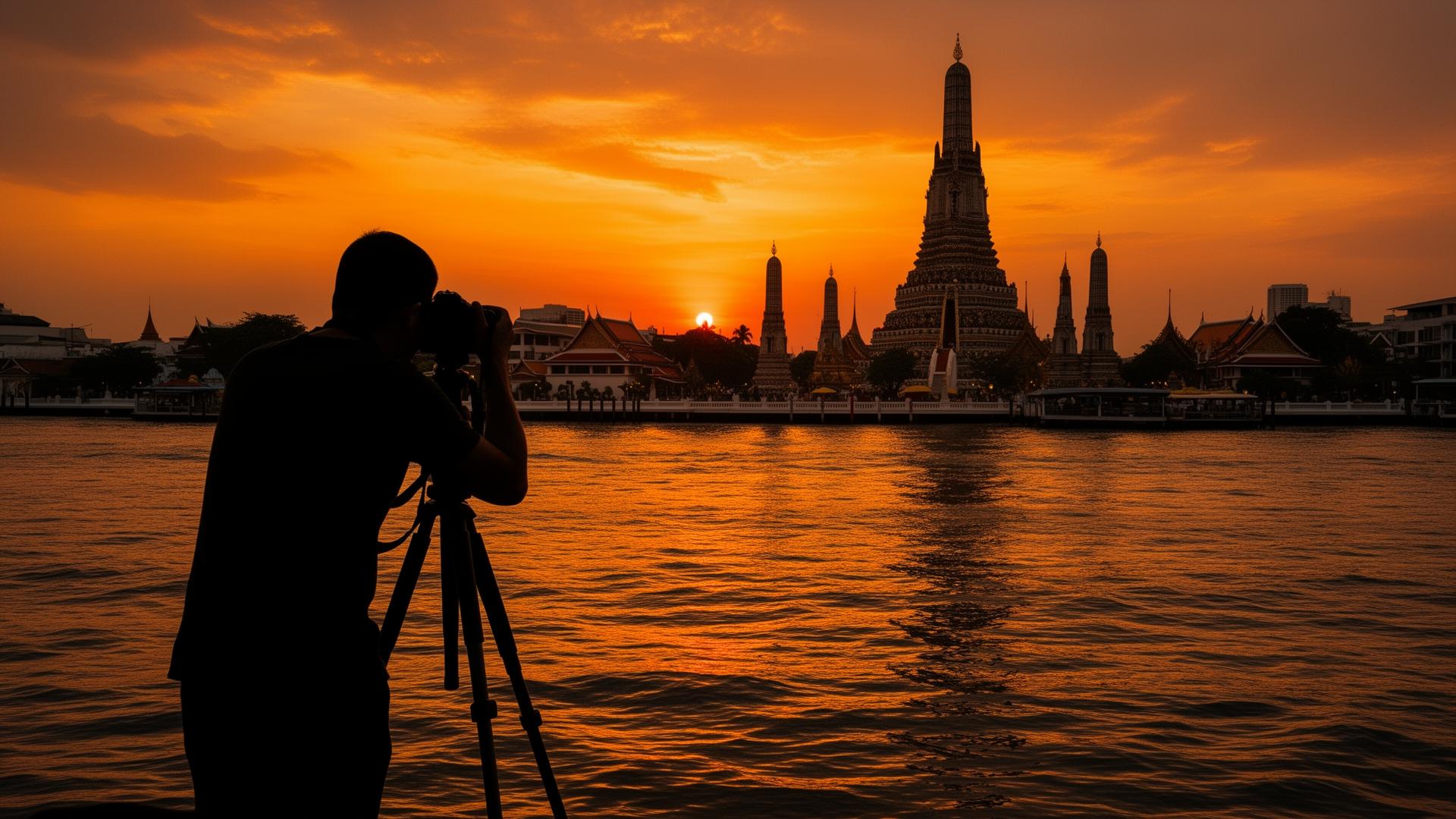
Photography Spots
Bangkok is one of the most photogenic cities in Asia. Here are the best spots.
Photography in Bangkok: A Photographer's Paradise
Bangkok is one of those rare cities that rewards every kind of photographer. Street photographers find endless human drama in the markets and alleyways. Architecture enthusiasts discover a skyline where centuries-old temple spires stand beside futuristic glass towers. Portrait photographers encounter warm, photogenic faces at every turn. Food photographers could spend a lifetime documenting the city's street food culture alone. Whether you shoot with a high-end mirrorless system or a smartphone, Bangkok delivers frame after frame of visual richness that few cities on earth can match.
Understanding Bangkok's light is essential for capturing the city at its best. The golden hour arrives early — sunrise breaks between 6:00 and 6:30 AM year-round, making early mornings the prime time for temple photography. Wat Arun at sunrise, viewed from across the Chao Phraya River, is one of Southeast Asia's most iconic shots. Late afternoon golden hour typically runs from about 4:30 to 6:00 PM, perfect for the warm glow on the Grand Palace or sunset silhouettes from rooftop bars. Midday light is harsh and unflattering from roughly 11:00 AM to 2:00 PM, especially during the hot season (March through May). This is the time to shoot in covered markets, inside temples, or focus on food photography in shaded street stalls.
The best season for photography in Bangkok is the cool season, from November through February. Skies are clearer, humidity is lower (meaning less haze over the skyline), and the comfortable temperatures make it pleasant to walk for hours with your camera. The rainy season (June through October) might sound unappealing, but experienced Bangkok photographers love it — dramatic storm clouds create spectacular sunsets, rain-slicked streets produce beautiful reflections, and the city empties of tourists, giving you cleaner compositions. The hot season (March through May) is the most challenging, with oppressive heat and frequent smog that flattens the light.
Temple photography etiquette is something every visiting photographer should understand. Always dress appropriately — covered shoulders and knees are required at all major temples, and this rule is strictly enforced at the Grand Palace. Remove your shoes before entering any temple building. Never pose disrespectfully with Buddha images (no pointing feet toward them, no back-to-Buddha selfies, no climbing on statues). Monks are generally happy to be photographed, but ask permission first with a respectful wai. During active prayer or ceremonies, be discrete and silence your shutter if possible. Some temple interiors prohibit photography entirely — look for signs and respect them.
Street photography thrives in Bangkok, but a respectful approach goes a long way. Most Thai people are friendly about being photographed, especially street food vendors who take pride in their craft. A smile, a point at your camera, and a nod of inquiry usually gets you a warm "yes." Market areas like Chinatown's Yaowarat Road, the Khlong Toei wet market, and Pak Khlong Talat (the flower market) are particularly rich hunting grounds. For candid shots, a 35mm or 50mm equivalent lens is ideal — close enough to capture emotion, far enough to remain unobtrusive.
A note on drone photography: Thailand has strict drone regulations. All drones must be registered with the CAAT (Civil Aviation Authority of Thailand) and the NBTC (National Broadcasting and Telecommunications Commission) before flying. Drones are prohibited near airports, government buildings, military areas, and national parks. Flying over crowds, temples, and the Grand Palace area is strictly forbidden. Penalties include fines up to 40,000 THB and potential imprisonment. If you plan to fly a drone, register it before your trip and carry your documentation at all times.
For gear, Bangkok's tropical climate demands some preparation. Humidity is high year-round, so bring silica gel packets for your camera bag and consider a weather-sealed body if you plan to shoot during the rainy season. A UV filter protects your front element from moisture and accidental bumps in crowded markets. Lightweight, breathable camera bags are essential — you will sweat through anything heavy. A compact travel tripod is useful for temple interiors and rooftop sunset shots. And do not forget lens wipes — the transition from air-conditioned spaces to outdoor heat causes instant fogging on your glass. Below, explore the best photography spots in the city organized by category.
Wat Arun at Sunrise
The Temple of Dawn glowing in golden morning light from the Tha Tien pier side. The prang (central spire) catches the first rays of sunlight and transforms from dark silhouette to radiant gold. The reflection on the Chao Phraya River creates a mirror effect on calm mornings. At sunset, shoot from the west bank for the prang backlit against a fiery sky.
- 📷Shoot from Tha Tien pier or Sala Rattanakosin hotel rooftop
- 📷Bring a tripod for low-light pre-dawn shots
- 📷Also stunning at sunset from the west bank
- 📷Cross-river ferry is 4 ฿ — cheapest photography transport
- 📷Blue hour (5:00-5:30 AM) gives magical purple-blue tones
Mahanakhon Skywalk
Thailand's highest observation deck with a glass floor tray extending from the building at 314m above the city. The glass floor section creates vertigo-inducing shots looking straight down at Bangkok streets. At sunset, the city transitions from golden daylight to a sea of lights — stay through blue hour for both looks in one visit.
- 📷Go before sunset for both daylight and night shots
- 📷Glass floor shots are viral-worthy — wear interesting shoes
- 📷Tickets: 880 ฿ — book online for 10% discount
- 📷Wide-angle essential for glass floor shots
- 📷Tripods technically not allowed but small ones are often tolerated
Train Market (Talat Rom Hub)
The famous railway market where vendors fold their umbrellas and pull back their goods as the train slowly passes through just inches away. The entire market transforms in 60 seconds and resets immediately after the train passes. The anticipation and the choreographed movement create incredible action-sequence opportunities.
- 📷Train passes ~8 times daily — check schedule at the station
- 📷Stand on the platform, not the tracks
- 📷Combine with Amphawa floating market nearby (weekends)
- 📷Video mode captures the action better than stills
- 📷Arrive 30 minutes early to scout angles and claim position
Chinatown (Yaowarat) at Night
Neon signs in Chinese and Thai characters, street food smoke rising through colored light, bustling energy from hundreds of vendors and diners — Yaowarat creates one of Bangkok's most photogenic streets. The main strip of Yaowarat Road is best, but side sois like Soi Phadungdao (near T&K seafood) offer more intimate, atmospheric shots.
- 📷Best from the middle of the road (watch for traffic!)
- 📷Neon signs reflect beautifully on wet pavement after rain
- 📷Bring a fast lens — f/1.8 or wider ideal for low light
- 📷Side sois offer more intimate compositions than the main road
- 📷Try shooting through steam from food stalls for atmospheric layers
- 📷MRT Wat Mangkon station puts you right in the heart
Lumphini Park at Golden Hour
Bangkok's Central Park offers an unlikely juxtaposition: monitor lizards sunbathing, lotus ponds in bloom, and gleaming skyscrapers reflected in the lake. Early morning mist creates ethereal shots. The resident monitor lizards (2-meter water monitors) are surprisingly photogenic and unafraid of humans. Evening golden hour casts warm light on the lake with the Mahanakhon tower as a backdrop.
- 📷Monitor lizards are best found near the lake's edge in the morning
- 📷Misty mornings (cool season, Nov-Feb) create ethereal shots
- 📷Joggers and tai chi practitioners at dawn add human interest
- 📷Evening: shoot skyline reflections from the south end of the lake
- 📷Telephoto lens helpful for wildlife close-ups of lizards and birds
Wat Phra Kaew & Grand Palace
The most ornate temple complex in Thailand. Glittering gold, emerald Buddha, and intricate mosaics. Every surface is covered in detail — from the gold leaf on the stupas to the millions of ceramic tiles on the prangs to the murals of the Ramakien epic along the gallery walls.
- 📷Arrive at 8:30 sharp to beat crowds
- 📷Wide-angle lens essential for the expansive courtyards
- 📷No drones allowed
- 📷Dress code strictly enforced — cover shoulders and knees
- 📷Macro lens reveals incredible mosaic detail on the prangs
- 📷The Ramakien murals along the galleries deserve their own photo session
Asiatique Sky
Giant Ferris wheel on the riverfront with Bangkok skyline views at sunset. The ride takes about 15 minutes, giving you time for multiple compositions. The warehouse-district setting below adds colorful foreground interest.
- 📷Ride during golden hour for best shots
- 📷150 ฿ per ride
- 📷Combine with riverside dinner
- 📷Free Asiatique shuttle boat from Saphan Taksin BTS
- 📷Shoot down at the colorful rooftops from the top of the wheel
Soi Cowboy / Nana Neon
Whether you love or hate the area, the neon-drenched streets make for incredible urban photography. Soi Cowboy's short stretch is a concentrated blast of colored light that looks like it belongs in a cyberpunk film.
- 📷Reflections on wet pavement after rain are magical
- 📷Ask before photographing people — respect privacy
- 📷Wide angle + slow shutter for light trails
- 📷Silhouettes of pedestrians against neon make strong compositions
- 📷Best after brief rain showers when pavement becomes a mirror
Bang Krachao Green Lung
An urban jungle island in a bend of the Chao Phraya River. Cycling paths wind through mangrove forests, elevated boardwalks cross over wetlands, and traditional Thai houses peek through tropical foliage.
- 📷Rent a bicycle at the pier (฿50-100)
- 📷Tree tunnels create incredible dappled light
- 📷Best on weekdays — less crowded
- 📷Sri Nakhon Khuean Khan Park has the best boardwalk shots
- 📷Waterproof your gear — paths can be muddy after rain
Benjakitti Skywalk
Elevated walkway above a forest park with city skyline backdrop. The 1.2km skywalk creates incredible leading lines with the glass-and-steel towers of Sukhumvit as background.
- 📷Golden hour creates warm tones through the trees
- 📷Leading lines of the walkway make great compositions
- 📷Free entry — open 5 AM to 9 PM
- 📷North end has the best skyline backdrop
- 📷Connects to Benjakitti Park lake for reflection shots
Pak Khlong Talat (Flower Market)
Bangkok's biggest flower market comes alive pre-dawn with explosions of color. Workers unload trucks of marigolds, orchids, roses, and jasmine while buyers negotiate under fluorescent lights. The color saturation is extraordinary.
- 📷Peak activity 3–5 AM for best atmosphere
- 📷Marigold and orchid sections are most photogenic
- 📷Wear closed shoes — wet floors
- 📷Fluorescent market lighting adds a gritty, documentary feel
- 📷Ask vendors before shooting close-ups of their work
Lebua Rooftop (Sky Bar)
Made famous by 'The Hangover Part II'. Stunning 360-degree city views from the 63rd floor of the State Tower. The open-air setting means no glass reflections in your photos.
- 📷Smart dress code enforced (no shorts/sandals)
- 📷Cocktails from 400 ฿ — worth it for the view
- 📷Arrive before sunset for the best light
- 📷No tripods allowed — use a high ISO and steady hands
- 📷The iconic golden dome makes a great foreground element
Talat Noi Street Art
Hidden alleys with massive murals, old Chinese shrines, and crumbling colonial architecture — Bangkok's most photogenic neighborhood for street photography. The mix of old Sino-Portuguese shophouses, contemporary street art, and working-class daily life creates layers of visual interest.
- 📷Follow Soi Charoen Krung 22–28 for best murals
- 📷Pair with a café hop at Warehouse 30 nearby
- 📷Less crowded weekday mornings
- 📷The old shophouses with peeling paint are as photogenic as the murals
- 📷Chinese shrines hidden in alleys offer incense-smoke atmospheric shots
Wat Paknam Green Ceiling
Viral psychedelic glass ceiling inside a white pagoda — an emerald Bodhi tree painting surrounded by a swirling galaxy of blues and greens. The 80-meter-tall white marble pagoda also houses relics and meditation halls.
- 📷Take BTS to Wutthakat + short taxi ride
- 📷Free entry — small donation appreciated
- 📷Also see the giant 69m bronze Buddha outside
- 📷Midday light through the windows illuminates the ceiling best
- 📷Ultra-wide-angle lens captures the full ceiling from inside
Golden Mount Sunset
360-degree panoramic sunset from atop Wat Saket hill — unobstructed views over old Bangkok rooftops, the Democracy Monument, and distant skyscrapers. The golden chedi at the summit glows warmly in the setting sun.
- 📷344 steps to the top — worth every step
- 📷Entry 50 ฿
- 📷Spectacular during Loy Krathong festival (November)
- 📷Shoot in all directions — each side offers a different Bangkok
- 📷The bells along the stairway make great foreground details
Ari Café Street
Bangkok's hipster heartland — pastel cafés, indie bookshops, and leafy residential lanes perfect for aesthetic shots. The contrast between modern café culture and traditional Thai houses creates unique compositions.
- 📷Walk from BTS Ari — most cafés within 500m
- 📷Weekend mornings for best light and fewer people
- 📷Try Porcupine Café and Casa Lapin for interiors
- 📷The side sois have the best tree-lined residential lanes
- 📷Great area for flat-lay coffee photography too
Charoen Krung Creative District
Bangkok's oldest road reborn as a creative hub — galleries, vintage shophouses, and Warehouse 30. The area blends 19th-century Sino-Portuguese architecture with contemporary art installations.
- 📷Warehouse 30 and ATT 19 are must-shoots
- 📷Colonial-era shopfronts make great framing
- 📷Combine with Talat Noi walk
- 📷Afternoon light hits the west-facing shopfronts beautifully
- 📷Look up — the rooflines and old signs are as photogenic as street level
Rot Fai Market Neon
Colorful tent tops viewed from the parking garage of Esplanade mall — one of Bangkok's most iconic aerial shots. The rainbow grid of market stalls creates a geometric pattern unique in the world.
- 📷Go to 4th floor of Esplanade Ratchada car park
- 📷Best at 7:30 PM when all lights are on but sky still has color
- 📷Tripod recommended for clean night shots
- 📷Zoom lens (70-200mm) isolates the best colorful sections
- 📷Thursday-Sunday evenings only
Khlong Lat Mayom Floating Market
One of Bangkok's most authentic floating markets, less touristy than Damnoen Saduak. Vendors paddle wooden boats loaded with tropical fruits, pad Thai, and grilled seafood along narrow canals shaded by overhanging trees.
- 📷Weekends only (Sat-Sun)
- 📷Boat tour of the canals costs 50-100 ฿
- 📷Telephoto lens useful for vendors on distant boats
- 📷Morning light filters through the trees along canals beautifully
- 📷Less crowded and more authentic than Damnoen Saduak
Sathorn Unique Tower (Ghost Tower)
The infamous abandoned skyscraper halted during the 1997 Asian financial crisis. Its skeletal concrete frame against the modern Bangkok skyline is a powerful visual metaphor. Note: entering the building is illegal and dangerous — photograph from outside or from neighboring rooftops.
- 📷DO NOT enter the building — it is illegal and structurally dangerous
- 📷Best photographed from Saphan Taksin BTS area or nearby rooftops
- 📷Sunset silhouette against the skyline is most dramatic
- 📷Drone shots (where legally permitted) capture the full eerie effect
- 📷The story behind it adds context for documentary-style photography
Jim Thompson House Garden
A lush tropical garden surrounding the preserved teak wood Thai houses of American silk entrepreneur Jim Thompson. The houses themselves are stunning examples of traditional Thai architecture, elevated on stilts and filled with Asian art and antiques.
- 📷Entry 200 ฿ — includes guided tour
- 📷Garden is free to photograph but house interiors are restricted
- 📷Morning light through the garden canopy is beautiful
- 📷Near BTS National Stadium — easy access
- 📷The koi pond and silk looms make great detail shots
Bangkok Knowledge Editorial
Verified teamA team of long-term Bangkok residents and travel writers — expats, journalists, and local Thai contributors — who fact-check every guide against on-the-ground experience and official sources.
Last updated: 2026-06