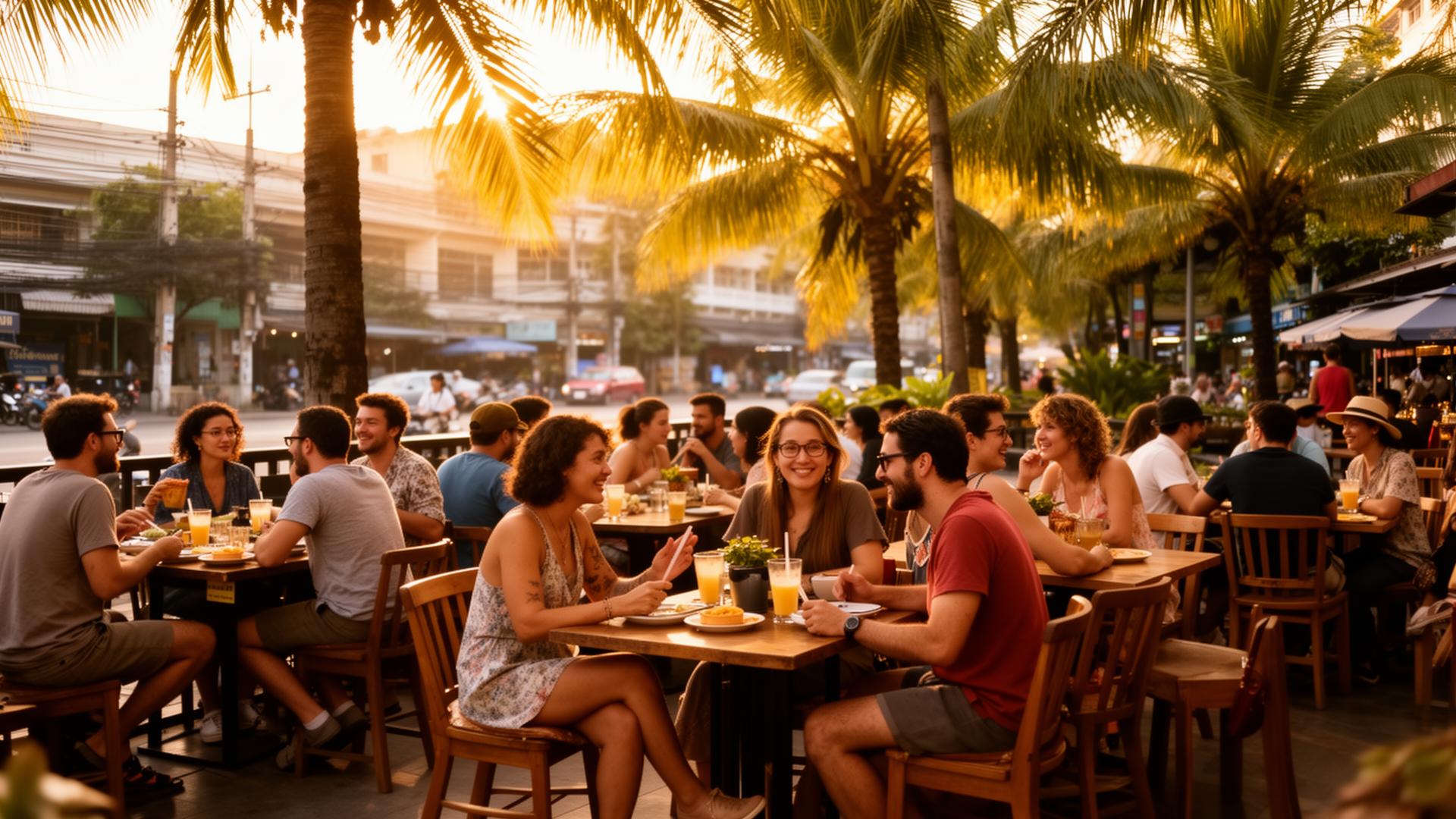
Retirement Guide
Visa options, healthcare, cost of living & community — everything for retiring in Bangkok
Retiring in Bangkok: Your Complete Guide
Thailand has been one of the world's most popular retirement destinations for decades, and for good reason. Tens of thousands of Western retirees call Bangkok, Chiang Mai, Hua Hin, and Pattaya home, drawn by a combination of affordable living, world-class healthcare, warm weather year-round, and a genuinely welcoming culture. Bangkok, in particular, offers retirees something rare: the energy and infrastructure of a global metropolis at a fraction of the cost of London, Sydney, or San Francisco.
Healthcare is often the deciding factor for retirees, and Bangkok excels here. The city is home to internationally accredited hospitals like Bumrungrad, BNH, and Samitivej, where English-speaking doctors — many trained in the US, UK, or Australia — provide care at a fraction of Western prices. A comprehensive health check-up that might cost $2,000 in the US runs about $200–400 in Bangkok. A private hospital room with attentive nursing staff costs less per night than a basic US emergency room co-pay. Many retirees combine private hospital care with affordable local health insurance, creating a healthcare safety net that would be financially impossible back home.
The retirement visa (Non-Immigrant O-A, commonly called the "retirement visa") is available to anyone aged 50 or older who can demonstrate financial stability. The main requirements are either 800,000 THB (approximately $22,000 USD) deposited in a Thai bank account, or a monthly income of at least 65,000 THB (about $1,800 USD), or a combination of both. The visa is renewable annually and allows you to stay in Thailand year-round. Some retirees alternatively use the Non-Immigrant O visa based on marriage to a Thai national, which has slightly different financial requirements. The Thailand Elite Visa, while more expensive, is another option that provides multi-year residency with fewer ongoing requirements.
Where you settle depends on your lifestyle preferences. Bangkok itself offers the most convenience: world-class shopping malls, international restaurants, excellent public transport, and a large established expat community. Popular Bangkok neighborhoods for retirees include Sukhumvit (especially the On Nut to Bearing stretch for its affordability), Silom for its central location, and the Ari area for a more local feel. Outside Bangkok, Chiang Mai attracts retirees who prefer a slower pace, cooler mountain weather, and even lower costs. Hua Hin, about three hours south of Bangkok, is beloved by retirees for its beach lifestyle, quieter atmosphere, and strong expat community — it is also where Thai royalty has historically vacationed. Pattaya, despite its reputation, has a large retiree population drawn by beachside condos at remarkably low prices.
The cost comparison to Western countries is striking. A comfortable retirement in Bangkok — including a modern one-bedroom condo, eating out daily, private healthcare, regular massages, and social activities — runs between 50,000 and 80,000 THB per month ($1,400–$2,200 USD). That same lifestyle in a mid-tier American city would cost $4,000–6,000 per month. In London or Sydney, even more. Many retirees find that their pension or Social Security income, which might mean a modest life at home, funds a genuinely comfortable lifestyle in Bangkok.
Below you will find detailed information on every aspect of retiring in Bangkok, from visa logistics and healthcare options to cost breakdowns and community resources.
Retirement Visa (Non-Immigrant O-A)
Available for those 50+. Requires ฿800,000 in a Thai bank or monthly income of ฿65,000. Valid for 1 year, renewable. Must obtain health insurance covering ฿40,000 outpatient and ฿400,000 inpatient. 90-day reporting required at immigration (can be done online). The ฿800,000 must be in your Thai bank account for at least 2 months before application and 3 months after. You can also apply from your home country via the Thai embassy with an income letter.
Non-Immigrant O (Based on Thai Spouse/Family)
For those married to a Thai national or with Thai children. Requires ฿400,000 in a Thai bank or monthly income of ฿40,000. Lower financial threshold than O-A visa. Same 90-day reporting requirement. Renewable annually at local immigration. Marriage must be registered with Thai authorities.
Thailand Elite Visa
Premium long-stay visa from ฿600,000 (5 years) to ฿2,000,000 (20 years). No financial requirements beyond the membership fee. VIP airport service, fast-track immigration, annual health checks. Great for retirees who want hassle-free residency. No 90-day reporting headaches — the Elite concierge handles it. Multiple tiers: Gold (5yr), Platinum (10yr), Diamond (15yr), Reserve (20yr).
Long-Term Resident (LTR) Visa
Introduced in 2022 for wealthy retirees, remote workers, and professionals. 10-year visa. Retirees must have $80,000+ annual income OR $250,000+ in assets with $40,000+ annual income. Benefits: 17% flat tax on Thai income, digital work permit, fast-track at airports. More affordable than Elite Visa for qualifying high-income retirees.
Healthcare for Retirees
Bangkok has world-class hospitals (Bumrungrad, BNH, Samitivej, Medpark) at a fraction of Western prices. Health insurance is mandatory for O-A visa. Annual checkup packages start at ฿5,000 at private hospitals. Many hospitals have geriatric specialists, cardiology centers, and comprehensive cancer screening. Dental care is excellent and affordable: cleaning ฿800-1,500, crown ฿8,000-15,000, implant ฿40,000-80,000. Prescription medications are significantly cheaper than in the West and many are available over the counter.
Health Insurance Options
O-A visa requires minimum coverage: ฿40,000 outpatient and ฿400,000 inpatient from a Thai-approved insurer. Popular options: AIA (Thai company, wide hospital network), Pacific Cross (expat-focused), Cigna Global, Luma (good value for under-60s). Premiums increase significantly after age 60 and again after 70. Budget ฿30,000-80,000/year for ages 50-65, ฿80,000-200,000/year for 65-75. Pre-existing conditions may be excluded or require higher premiums. Some retirees self-insure for routine care and carry catastrophic coverage only.
Best Bangkok Neighborhoods for Retirees
Ari: walkable, trendy cafés, good hospitals nearby, BTS access, quiet sois — great for active retirees who want village-feel in the city. Sukhumvit (Asok-Phrom Phong): maximum convenience, multilingual services, every amenity walking distance, but noisy and pricey. Sathorn/Silom: business district calm on weekends, BNH Hospital nearby, good restaurants. On Nut/Bang Na: affordable, BTS connected, spacious condos, Mega Bangna mall. Riverside (Charoen Nakhon): emerging area with ICONSIAM, quieter, great views, new condos at lower prices.
Retirement Outside Bangkok
Hua Hin: seaside retirement hub 2.5 hours from BKK, large expat community, good hospitals (Bangkok Hospital Hua Hin), golf courses, monthly cost 20-30% less than Bangkok. Chiang Mai: cooler weather (20-30°C), strong expat community, excellent healthcare (Chiang Mai Ram), stunning nature, but PM2.5 smoke season Feb-April is severe. Pattaya: affordable beachside living, large international community, good hospitals, easy access to Bangkok, but can feel touristy. Koh Samui: island paradise, growing expat community, Bangkok Hospital Samui, but limited shopping and higher import costs.
Social Communities & Activities
Active retirement communities include: Bangkok Expats Club (monthly meetings, 500+ members), Rotary Club Bangkok (networking and charity), FCCT (Foreign Correspondents' Club — talks and events), Royal Bangkok Sports Club (golf, tennis, swimming — membership required), Hash House Harriers (running/walking groups), British Club Bangkok, numerous golf societies, volunteer organizations (Habitat for Humanity, teaching English), bridge clubs, photography groups, and cycling groups. Many hospitals run free health seminars for seniors.
Banking & Finances
Open a Thai bank account (Bangkok Bank and Kasikorn are expat-friendly — bring passport, visa, and proof of address). International transfers via Wise save 2-5% vs bank wire fees. Thailand has tax on foreign income remitted in the same calendar year (changed 2024). ATM withdrawal fees: ฿220 per transaction for foreign cards. Consider opening a Wise multi-currency account as a bridge. For large transfers (฿800,000 visa deposit), use a forex broker or Wise for best rates. Keep records of all transfers for immigration proof.
Daily Life & Practicalities
Bangkok has everything a retiree needs. Supermarkets: Tops, Villa Market (imported goods), Makro (bulk). Malls: CentralWorld, EmQuartier, ICONSIAM for AC-escape and socializing. Internet: fiber broadband from ฿600/month (100+ Mbps), mobile 5G from ฿500/month. Maid/cleaning service: ฿300-500 per visit. Laundry: ฿40-60/kg at local shops. Cooking gas delivery, water delivery, and most services come to your door. Grab app for transport, food delivery, and errands. LINE app is essential — used for everything from doctor appointments to condo management.
Driving & Transport for Retirees
Most Bangkok retirees do not own a car — BTS/MRT, Grab, and taxis are sufficient and stress-free. If you want to drive, you need a Thai driving license (easy process with international license). Car ownership: used Toyota/Honda from ฿300,000, insurance ฿10,000-20,000/year. Many retirees use a monthly Grab budget of ฿5,000-10,000 which covers daily needs. For trips to Hua Hin, Pattaya, or Koh Samet, rent a car or use minivan services.
Language & Cultural Adjustment
Learning basic Thai dramatically improves quality of life. Key phrases: 'sawadee khrap/kha' (hello), 'khop khun' (thank you), 'mai pen rai' (no worries). Thai language schools: AUA (฿6,000/60 hours), Duke Language School, Union Thai Language. Many retirees pick up functional Thai within 6-12 months of effort. Cultural tips: Thai society values 'saving face' — avoid public confrontation, stay calm, smile. Remove shoes before entering homes. The wai (prayer-like gesture) is used for greeting elders and showing respect.
Monthly Cost Breakdown
| Expense | Budget | Comfortable | Luxury |
|---|---|---|---|
| Rent (1BR condo) | ฿10,000 – ฿15,000 | ฿25,000 – ฿45,000 | ฿60,000 – ฿150,000 |
| Food & dining | ฿8,000 – ฿12,000 | ฿15,000 – ฿25,000 | ฿40,000 – ฿80,000 |
| Health insurance | ฿30,000 – ฿50,000/yr | ฿60,000 – ฿120,000/yr | ฿150,000 – ฿300,000/yr |
| Transport | ฿2,000 – ฿4,000 | ฿5,000 – ฿10,000 | ฿15,000 – ฿30,000 |
| Utilities (electric, water, internet) | ฿2,000 – ฿4,000 | ฿3,000 – ฿6,000 | ฿5,000 – ฿10,000 |
| Leisure & social | ฿3,000 – ฿5,000 | ฿10,000 – ฿20,000 | ฿30,000 – ฿60,000 |
| Mobile phone (5G) | ฿300 – ฿500 | ฿500 – ฿800 | ฿800 – ฿1,500 |
| Maid / cleaning service | ฿0 (self) | ฿1,200 – ฿2,000 | ฿4,000 – ฿8,000 |
| Gym / fitness | ฿1,000 – ฿2,000 | ฿2,000 – ฿4,000 | ฿5,000 – ฿15,000 |
| Visa & admin costs | ฿2,000 – ฿3,000/yr | ฿2,000 – ฿5,000/yr | ฿50,000 – ฿120,000/yr (Elite) |
| Monthly total | ฿30,000 – ฿45,000 | ฿65,000 – ฿115,000 | ฿180,000 – ฿400,000+ |
Bangkok Knowledge Editorial
Verified teamA team of long-term Bangkok residents and travel writers — expats, journalists, and local Thai contributors — who fact-check every guide against on-the-ground experience and official sources.
Last updated: 2026-06