Culture & Etiquette
Understanding Thai culture will transform your Bangkok experience.
Understanding Thai Culture
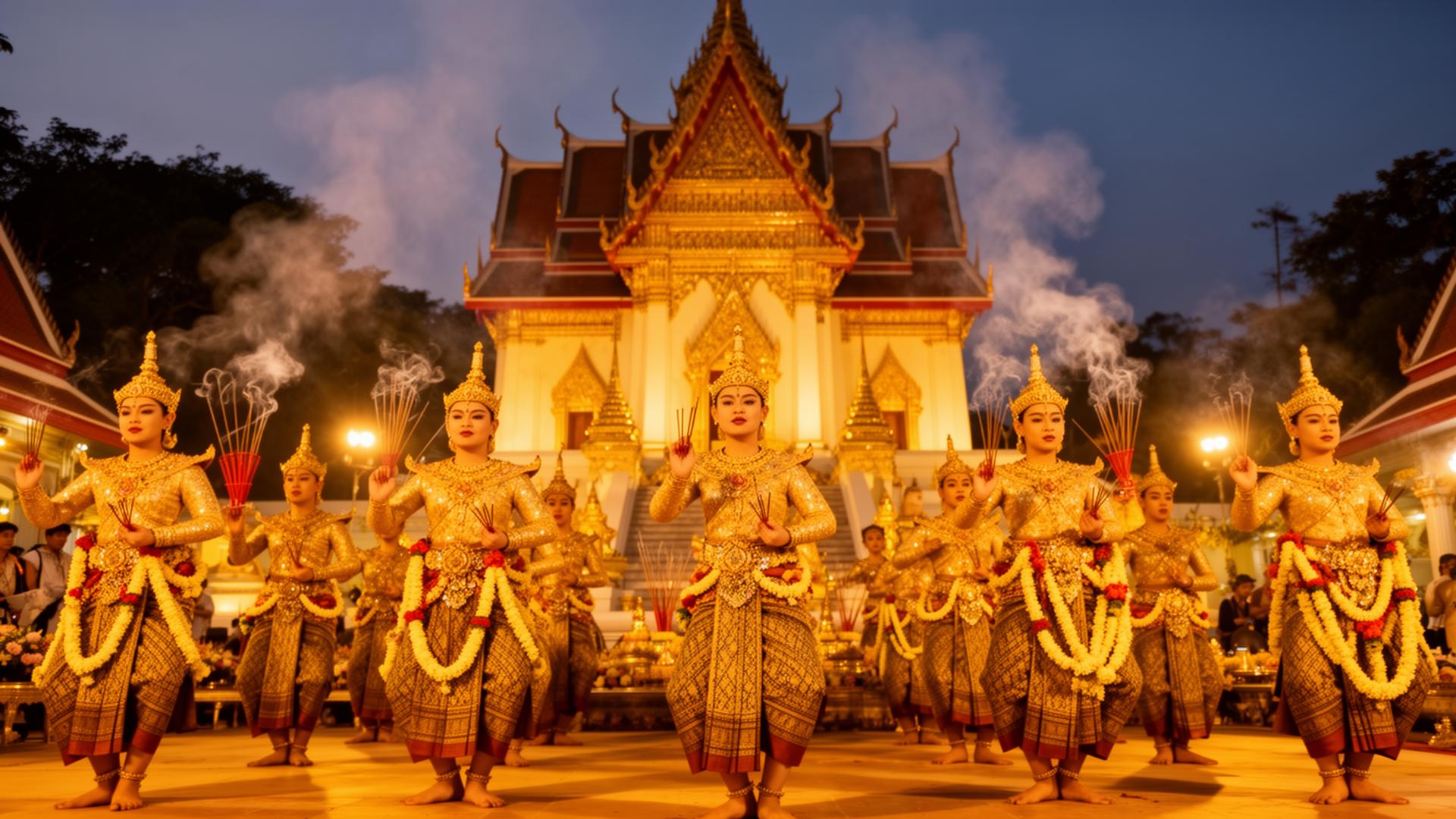
Thai culture is one of the most nuanced and layered in Southeast Asia, shaped by centuries of Theravada Buddhism, a deep reverence for the monarchy, and social customs that prioritize harmony, respect, and face. Understanding even the basics of Thai cultural norms will not only help you avoid awkward situations — it will genuinely transform the quality of your interactions and the warmth of your reception. Thais are remarkably forgiving of foreign cultural mistakes, but they deeply appreciate visitors who make an effort to understand their way of life.
The wai — the prayer-like gesture where palms are pressed together and raised toward the face with a slight bow — is the cornerstone of Thai social interaction. It serves as a greeting, a thank-you, an apology, and a sign of respect. The height of the hands indicates the level of respect: higher for monks and elders, chest-level for peers. As a foreigner, you are not expected to initiate a wai, but returning one when offered is polite and warmly received. The simplest rule: if someone wais you, wai them back with a smile. Do not wai service staff, children, or people significantly younger than you — a smile and nod suffice in those situations.
Respect for the Thai monarchy is not merely a cultural preference — it is the law. Lese-majeste laws (Article 112 of the Thai Criminal Code) carry severe penalties, including imprisonment of up to 15 years per offense. Never make disrespectful comments about the King, Queen, or any member of the royal family, whether in conversation, on social media, or even in private messages. This extends to images of the King — Thai currency features the King's portrait, so never step on, crumple, or deface bills or coins. When the royal anthem plays in cinemas before films, stand respectfully. This is not optional cultural politeness; it is a deeply held national value and a serious legal matter.
Temple etiquette is essential knowledge for any Bangkok visitor. Always dress modestly — covered shoulders and knees are the minimum requirement, and many major temples will turn you away or require you to rent cover-up garments. Remove your shoes before entering any temple building (ubosot or viharn). Inside, never point your feet toward a Buddha image or a monk — the feet are considered the lowest and most unclean part of the body in Thai culture. Sit in the "mermaid" position with legs tucked to the side if sitting on the floor. Women must never touch a monk or hand objects directly to them; place items on a cloth or surface for the monk to pick up. When making offerings, do so with both hands or with the right hand supported by the left.
The concept of "face" (or "na" in Thai) pervades every social interaction. Losing face — being publicly embarrassed, criticized, or shown to be wrong — is one of the worst things that can happen in Thai social context. This means Thais will avoid direct confrontation, rarely say "no" outright (a vague "maybe" often means no), and express displeasure through subtle withdrawal rather than open conflict. As a visitor, never raise your voice, never publicly criticize someone, and never make a Thai person look bad in front of others. If you have a complaint at a hotel or restaurant, address it calmly and privately. Understanding this one concept will explain much of Thai social behavior that might otherwise seem puzzling.
Sanuk — the Thai concept of fun — is perhaps the most endearing aspect of Thai culture. Thais believe that life should be enjoyable and that even work and mundane tasks should contain an element of fun. This philosophy manifests everywhere: the playful banter between market vendors, the elaborate decorations on ordinary taxis, the spontaneous laughter that fills any Thai gathering. Food is the ultimate social glue in Thailand. Meals are shared communally, with dishes placed in the center of the table for everyone to enjoy. Eating alone is uncommon among Thais and sometimes viewed with sympathy. If you are invited to eat with Thai people, always accept — food is how relationships are built and maintained.
Thailand's calendar is rich with holidays and festivals that reveal the depth of Thai culture. Songkran (Thai New Year, April 13–15) transforms Bangkok into a massive water fight celebrating renewal and respect for elders. Loy Krathong (November full moon) sees thousands of candlelit floats released onto rivers and canals in one of Asia's most beautiful festivals. Makha Bucha and Visakha Bucha mark important Buddhist holy days with candlelit temple processions. The King's Birthday (July 28) and the Queen Mother's Birthday (August 12, also Mother's Day) are celebrated with elaborate public displays. Understanding these celebrations adds depth to your visit and shows respect for the culture that welcomes you. Explore the topics below to learn more about specific aspects of Thai culture and etiquette.
Showing all 10 topics
The Wai Greeting
The wai is a prayer-like gesture used as a greeting, thank-you, and sign of respect. The higher the hands and deeper the bow, the more respect shown.
- •Wai monks with hands at forehead level
- •For elders, hands at nose level
- •For peers, hands at chest level
- •Don't wai children or service staff — just smile
Temple Etiquette
Temples (wats) are sacred places. Dress modestly, remove shoes before entering buildings, and show respect to all Buddha images.
- •Cover shoulders and knees
- •Remove shoes before entering chapel
- •Never point feet at Buddha images
- •Women should never touch a monk
- •Don't climb on statues or ruins
The Royal Family
The Thai monarchy is deeply revered. Lèse-majesté laws (Article 112) are strictly enforced — disrespect can result in imprisonment.
- •Stand for the Royal Anthem before movies
- •Never step on Thai currency (King's image)
- •Speak respectfully about the monarchy at all times
- •Stand still during 8am and 6pm national anthem broadcasts
Head & Feet
The head is the most sacred part of the body; feet are the lowest. Never touch someone's head or point your feet at people or religious objects.
- •Don't pat anyone on the head
- •Don't point feet at people or Buddha
- •Tuck feet under you when sitting on the floor
- •Don't step over someone sitting on the ground
Tipping Culture
Tipping isn't mandatory but appreciated. Round up taxi fares, tip 10% at upscale restaurants, 20–100 ฿ for massages.
- •Street food: no tip expected
- •Restaurants: 10% if no service charge
- •Thai massage: 50–100 ฿
- •Hotel bellboy: 20–50 ฿ per bag
- •Taxi: round up to nearest 5–10 ฿
Songkran (Thai New Year)
April 13–15 — the world's biggest water fight! Traditional Thai New Year celebrated with water throwing, temple visits, and family gatherings.
- •Protect electronics in waterproof bags
- •Silom and Khao San are the epicenters
- •Don't spray monks or elderly with water guns
- •Banks and government offices close 3 days
Loy Krathong
Full moon in November — floating decorated banana-leaf baskets (krathong) on rivers to pay respect to water spirits and let go of negativity.
- •Chao Phraya riverfront is the best spot
- •Make your own krathong at workshops
- •Yi Peng (lantern festival) in Chiang Mai is related
- •One of the most photogenic events in Thailand
Buddhist Culture
95% of Thais are Buddhist. Morning alms giving, monk chanting, and Buddhist holy days shape daily life. Understanding Buddhism deepens your Bangkok experience.
- •Alms giving at dawn — observe respectfully
- •Buddhist holy days (Wan Phra) — no alcohol sales
- •Making merit (tam bun) is central to Thai life
- •Meditation retreats are open to foreigners
Thai Food Culture
Food is central to Thai social life. Meals are shared communally with multiple dishes. Street food is a way of life — Thais eat 4–5 small meals daily.
- •Spoon in right hand, fork in left (push food onto spoon)
- •Chopsticks only for noodle soups
- •Saying 'aroi' (delicious) delights cooks
- •Avoid wasting rice — it's considered disrespectful
Do's and Don'ts
Thailand is incredibly welcoming, but knowing key cultural norms will help you avoid uncomfortable situations and show respect.
- •DO smile — Thailand is the 'Land of Smiles'
- •DO dress modestly at temples and government buildings
- •DON'T raise your voice or show anger publicly
- •DON'T touch anyone's head
- •DON'T point with your finger — use your chin or whole hand
- •DO remove shoes when entering homes