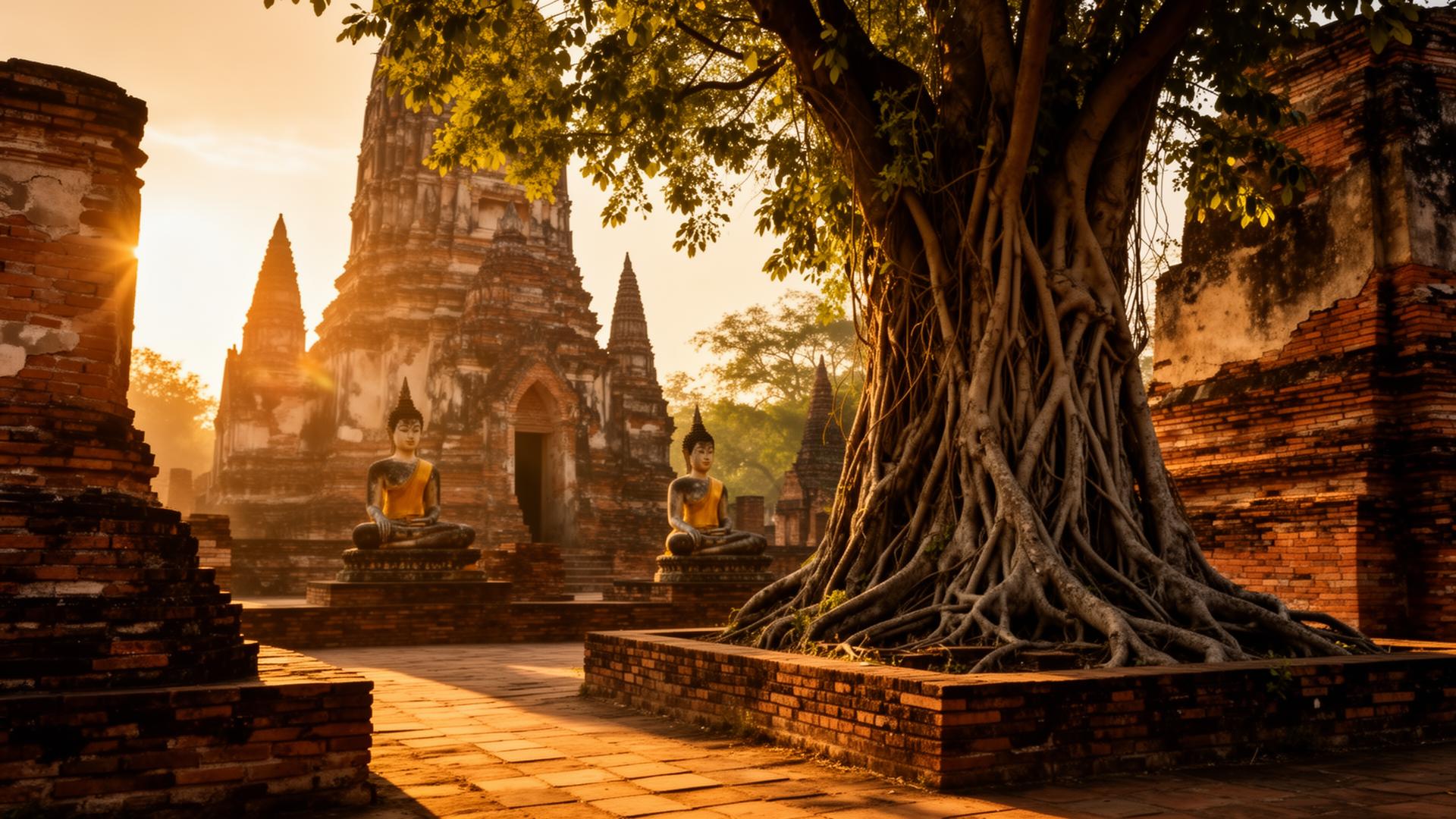
Bangkok to Kanchanaburi
The River Kwai, the Death Railway, and Thailand's most photogenic waterfalls
Bangkok to Kanchanaburi — the complete guide
Kanchanaburi lies 130 kilometres west of Bangkok — the closest of the five destinations in this guide — and it packs an extraordinary amount of Thailand into a small area. This is where the Second World War left its most visible Thai fingerprint: the Bridge over the River Kwai and the Death Railway, built by Allied prisoners and Asian labourers under Imperial Japanese command in 1942–43, at a cost of more than 100,000 lives. But it is also a landscape destination in its own right — limestone karst mountains rise from the Kwai Yai and Kwai Noi rivers, the seven turquoise tiers of Erawan Waterfall are among the country's most photographed, and the hills west of town shelter respectful elephant sanctuaries, hot springs, and a national park chain that runs all the way to the Burmese border at Three Pagodas Pass.
For a Bangkok-based traveller, the day-trip-versus-overnight decision comes down to how much of the war history you want to absorb. A long day trip covers the Bridge, the JEATH War Museum, and the Kanchanaburi War Cemetery comfortably. Two days lets you add Erawan Falls (a 90-minute drive north from the town) and the more sobering Hellfire Pass Memorial Museum, an Australian-run interpretive site on the actual cutting where the worst atrocities occurred. Transport options are simpler than for beach destinations: the historic State Railway of Thailand Death Railway service still runs daily from Thonburi station (not Krung Thep Aphiwat) for a symbolic 100 baht, taking about 2 hours 40 minutes to reach Kanchanaburi and continuing to the current end-of-line at Nam Tok. Minivans from Sai Tai Mai do the run in 2 hours flat for 120–150 baht, and a private car is 2 hours on Highway 4 for 1,800–3,000 baht. Khao San Road-departing tour buses bundle the Bridge, war cemetery, and Erawan into a single 500–1,500 baht day.
The best strategy is to travel out by minivan or car in the morning, do the war-history sites in the afternoon when it's less crowded, sleep in a raft-house on the river (the classic Kanchanaburi experience), then wake early on day two for Erawan Falls before the tour buses arrive. Erawan's seven tiers get busy after 10:00 and the upper tiers require a serious hike, so an 08:00 arrival at the park gates is worth the effort. On the way back to Bangkok, take the Death Railway train at least one direction — the wooden Wampo viaduct, cantilevered off the cliff over the Kwai Noi, is one of Southeast Asia's most striking rail moments. See /rainy-season for waterfall timing; some upper Erawan tiers close in the late rainy season and cool season is the reliable window.
Transport options
Sai Tai Mai minivan
Departs every 30 minutes from Sai Tai Mai directly to Kanchanaburi bus terminal. Fastest option and comfortable enough for the short run. From the terminal, a tuk-tuk or songthaew to the Bridge is 60–100 baht.
Best for: Speed and simplicity
Death Railway from Thonburi
The historic State Railway service departs Thonburi station (west bank, cross to Bang Khun Non). Runs twice daily; the morning departure lets you continue past Kanchanaburi over the Wampo viaduct and Death Railway curves. No advance booking — pay on the train.
Best for: History and one of Asia's great rail views
Public bus (Class 2 A/C)
Cheaper and less cramped than a minivan; departs Sai Tai Mai and Mo Chit's smaller Southern annexe. Reliable but slower — worth it if you get motion sickness in vans.
Best for: Comfort for a low fare
Private car / hire with driver
Highway 4 (Phetkasem) west out of Bangkok. A private car is the only way to sensibly combine the Bridge, Erawan Falls, and Hellfire Pass in a single day. Book through your hotel or an intercity Bolt/Grab.
Best for: Reaching Erawan and Hellfire Pass
Khao San Road day-tour bus
Backpacker-favourite bundle: Bridge over the River Kwai, war cemetery, short Death Railway ride, Erawan Falls, and lunch. Convenient but tight on time at each stop. See /budget-travel.
Best for: One-day 'see it all' without planning
Two-day Kanchanaburi sample itinerary
Best time to go
November to February for cool weather and full Erawan waterfalls with reliable upper-tier access. December weekends can crowd the park before 09:00. Avoid March–May afternoons (35°C+ and the water can be a trickle in dry years). The rainy season Jun–Oct produces spectacular full-volume falls but slippery hikes; check park closures — see /rainy-season.
Where to stay
The classic Kanchanaburi experience is a floating raft-house on the Kwai Yai — try River Kwai Resotel, The Float House, or one of the cheaper family-run rafts north of the Bridge. In town, U Inchantree Kanchanaburi and Ta Chai Villa are quiet mid-range picks near the war cemetery. For Erawan-focused trips, Home Phutoey River Kwai Resort is 30 minutes from the park gates.
Compare Bangkok → Kanchanaburi on 12Go
Real-time trains, buses, minivans, and flights with combined booking.
Affiliate link — we may earn a commission. Does not affect our recommendations.Learn more
Find a hotel in Kanchanaburi
Free cancellation on most rooms · price-match
Affiliate link — we may earn a commission. Does not affect our recommendations.Learn more
You Might Also Like
Sources & official references
- State Railway of Thailand — Official schedule for the historic Death Railway from Thonburi to Nam Tok via Kanchanaburi.
- TAT Kanchanaburi — Tourism Authority of Thailand province page — festivals, war memorial info, contacts.
- DNP Erawan National Park — Department of National Parks page with opening hours, entry fees, and closure notices for the upper tiers.
Long-time Bangkok resident who has ridden every BTS line before opening, walked every soi from Sathorn to Ari, and made every overland border run at least twice. Covers transport, driving, day-trips, the 10 Bangkok-to-* destinations, safety, and the scam guides — including the ones he learned about the hard way. Rides trains and buses to verify current fares before publishing.
Last updated: 2026-07-01